
RED DESERT DREAMINGS
Port Melbourne, Melbourne, VIC
Red Desert Dreamings is an Aboriginal art gallery located in Port Melbourne, Victoria, that stocks authentic paintings, barks, artefacts and glass made by Indigenous artists from Australia's Central and Western Desert regions, the Kimberley, and Tiwi Islands. The gallery takes care to represent artists fairly and handle their cultural knowledge with respect.
- Address
- Unit 6/200 Turner St, Port Melbourne, VIC, 3207
- Mediums
- Painting, Ceramics, Glass, Works on Paper
- Price range
- Mid ($1k–$10k) · Established ($10k–$50k)
- Services
- Art consultancy, Commissions
Location
About RED DESERT DREAMINGS
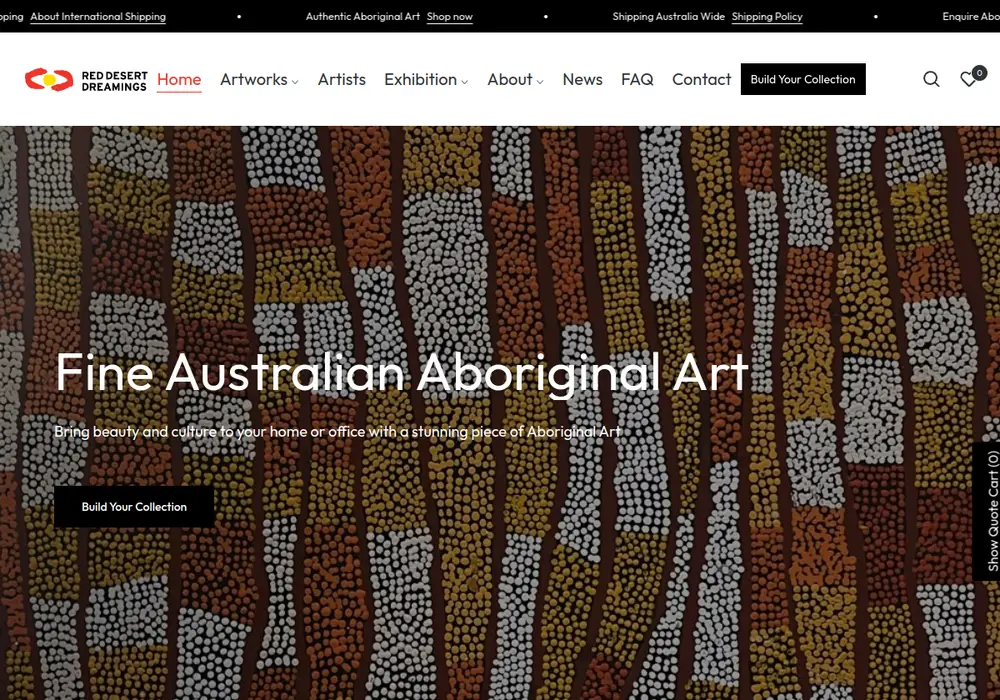
Red Desert Dreamings: Aboriginal Art from Port Melbourne
{"text":"Red Desert Dreamings is based in Port Melbourne, Victoria, and works directly with Indigenous Australian artists to stock authentic pieces. Built on respect and real relationships with the artists themselves, the gallery focuses on contemporary Aboriginal and Torres Strait Islander paintings from Central and Western Desert regions, the Kimberley, Tiwi Islands and communities right across Australia. The gallery stocks work by respected Aboriginal artists that appeals to everyone from newcomers to serious collectors. Each piece comes with artist bios, cultural context, and information about the stories behind it, so you know what you're looking at."}.
The gallery operates from Port Melbourne and also partners with Tellurian Wines in Heathcote and Bespoke Frames in Kyneton to stock work there, plus runs its own stockroom. This setup gets authentic Aboriginal art to more people across regional Victoria while keeping standards high and making sure the artists themselves actually benefit from the sale.
The Art of the Red Centre
Red Desert Dreamings stocks paintings from Central Australia, with a strong focus on the colour work of the red centre. Kuddtji Kngwarreye's pieces are standouts here. His paintings pack in richly coloured paint, sometimes just one colour, sometimes a layered mix of tones. You see the blues of waterholes sitting against the reds and oranges of midday heat, with delicate pinks, greens and purples for desert plants. Every work shows real knowledge and connection to ancestral Country.
George Ward Tjungarrayi is also represented, with his paintings of Tingari Cycle Dreamings built on decades of work at Mt Liebig and Kintore. The gallery stocks pieces by emerging and mid-career artists like Jeannie Pitjara, Minnie Pwerle, and Esther Giles Nampitjinpa. Each artist brings their own take to how they paint Country, use abstraction, and tell ancestral stories. The collection shows how varied and sophisticated contemporary Aboriginal painting really is.
Artist Authority and Family Lines in Aboriginal Art
At Red Desert Dreamings, the focus is on helping collectors grasp how Aboriginal art works within its cultural framework. In Central Desert communities, kinship systems control which stories an artist can paint, which ancestral journeys appear in their work, and what gets shared publicly. Artists don't have free rein over their subjects. They paint stories that belong to their family line, with the right to paint those stories passed down through generations and ceremony. This protects cultural knowledge and keeps its meaning intact. Real understanding means recognising these boundaries and respecting which stories are open to wider audiences and which ones stay private.
Red Desert Dreamings passes this knowledge on through blog posts about kinship, why an artist's background matters when you're buying work, and how to engage ethically with the Aboriginal art market. The gallery sees artist biography as fundamental, not optional. When you know who made the piece, where they're from, and what cultural authority they carry, you buy with real understanding and purpose. In Indigenous Australian art, the artist's story isn't extra detail. It's essential to what the work actually is.
Building a Collection with Confidence
Red Desert Dreamings puts ethics first when it comes to Aboriginal art. If you're a serious collector looking to buy, you can get proper advice directly through email. They keep affordable pieces on hand for people getting started with Indigenous Australian art, alongside works by more established artists across different price ranges. You'll find things like Mina Mina Dreaming by Judy Napangarrdi Watson in their collection.
Getting in touch is straightforward. They're active on Instagram and run a newsletter where they share news about new works, artist backgrounds and shows coming up. It's the kind of place where you can actually talk to someone who knows their stuff, which matters when you're buying art tied to culture and community. Red Desert Dreamings, Port Melbourne, VIC 3207.
Source: reddesertdreamings.com.au · Last verified 01/06/2026