
Behind the Scenes
What to Expect at an Australian Gallery Exhibition Opening
1 June 2026
The Rituals and Social Dynamics of the Opening Night
You walk into an Australian gallery opening and suddenly you're part of a deliberate mix of art, talk, networking, and people. These nights matter to Australia's visual arts scene, pulling in serious collectors alongside emerging artists, curious first-timers, and art critics. The opening night feels different to just popping in on a Wednesday afternoon. There's something in the air, a sense that tonight is special, and it brings people through the doors who wouldn't normally show up.
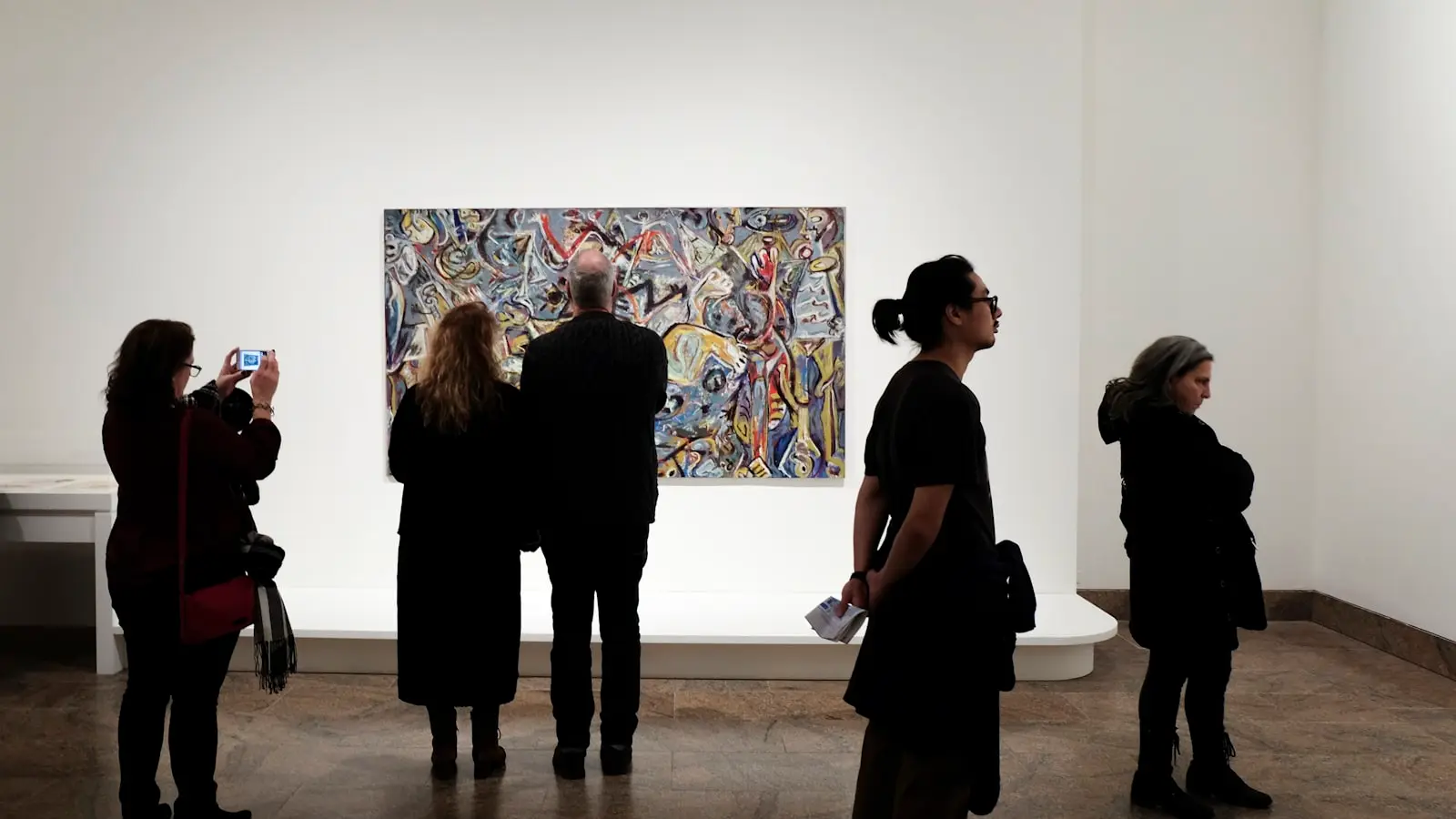
The vibe shifts as the evening goes on. Early on, it's quieter and more relaxed, so you can actually look at the work and have a proper chat with someone without squeezing through crowds. More people arrive, wine glasses get filled up, and conversation fills the space in a friendly way. This social side isn't pointless. It says something about how Australians approach art, treating it as something accessible to everyone. Unlike some overseas gallery scenes that can feel unwelcoming, Australian openings tend to be open to people wanting to learn and get stuck in. Gallery staff, the artists themselves, and the regulars will usually have a genuine yarn with you about the work, no matter who you are or where you've come from.
Knowing how these nights work actually helps you feel more comfortable. There's a loose set of rules people follow. The art comes first. Longer conversations drift off to quieter spots. Most people get that the night is for both serious buyers and people who just like looking at art. Even the fancy galleries in Melbourne's Fitzroy or Sydney's Paddington don't feel snobby or invite-only. There's a real down-to-earth friendliness that runs through the whole scene, even at the top end.
Preparing Yourself: Dress Code and Expectations
What to wear can stress out first-timers, but honestly, it's pretty straightforward. Australian gallery openings are casual compared to fancy evening events in other cities. You'll spot everything from blazers and nice dresses to good jeans with quality tops, and nobody cares which you choose. The basic idea is to look like you've put in some thought, not necessarily formal, just clean and neat. Smart-casual works best: clothes that are well-fitting and suggest you're taking the occasion seriously without being uncomfortable.
Your shoes matter because you'll be standing around for hours. Gallery floors are usually polished concrete or timber, and comfortable footwear beats stylish shoes that hurt. Go for something intentional that isn't gym wear or casual weekend stuff. Think about practical matters too. A small bag lets you grab gallery cards and catalogues without fussing, keeping your hands free for a glass and talking to people.
Openings get crowded, so expect queues for drinks and snacks, and plenty of people chatting in little groups. Most Australian galleries let you help yourself to wine and food, so no waiting for staff. If it's a major show or a well-known artist, the early evening gets packed. The trick some people use is arriving later when the rush dies down, so you can actually look at the art without elbowing through a crowd.
Navigating the Artworks and Exhibition Layout
Australian galleries display extraordinary diversity in their spatial organisation, and understanding how to navigate an exhibition enhances your experience considerably. Many contemporary spaces adopt a deliberately non-linear approach, allowing visitors to chart their own path through the work rather than following a prescribed sequence. This reflects the Australian curatorial philosophy that prioritises open interpretation and viewer autonomy. Unlike traditional museum displays with numbered works and strict directional flows, gallery exhibitions often present pieces in clusters or conversations, inviting you to discover relationships and dialogues between artworks through your own exploration.
The physical nature of an opening night means you'll likely miss some works entirely during your first pass through the space, and that's entirely acceptable. The professional approach is to take a contemplative first circuit, spending time with pieces that particularly resonate, then revisit the exhibition with fresh eyes if you have time. Many serious collectors spend considerable time at openings simply re-encountering works, deepening their understanding through repeated viewings rather than rushing through the entire space in one ambitious sweep. The gallery staff, typically the artist, curator, or gallerists themselves, are extraordinarily valuable resources. Don't hesitate to ask questions about technique, inspiration, or the artist's process. These conversations often reveal layers of meaning not immediately apparent from viewing alone.
Pay attention to how the gallery has positioned the works within the space. Professional curators make deliberate choices about scale, colour relationships, pacing, and sightlines. A large abstract canvas might deliberately complement a series of smaller figurative works, or a sculptural piece might function as a breathing point between visually intense sections. Australian galleries, from small artist-run spaces in regional towns to prestigious contemporary institutions in major cities, employ thoughtful spatial thinking. Noticing these relationships deepens your understanding of both individual pieces and the exhibition as a unified artistic statement rather than merely a collection of separate items.
Engaging with the Artist and Gallery Professionals
Australian gallery openings often give you something you won't get elsewhere: the artist is actually there. While major international museums keep artists at arm's length, here you'll typically find the creator working the room, talking to people about their work. It's a real advantage. You get to hear straight from them about what they were trying to do, how they made it, what inspired them, and where it all came from. Plenty of visitors get nervous about approaching an artist, worried they'll be in the way or that they're not smart enough to say anything worthwhile. The truth is most artists love when someone genuinely engages with what they've made. They don't care about your credentials.
There's no mystery to the etiquette. If the artist is already talking to someone, leave them alone. If they're standing near their work, walk up, introduce yourself, tell them what caught your eye, and ask them to elaborate if you want. Some artists will chat for ages, others prefer a quick word and then they're off. Pay attention to which kind you've got. Anything about how they made the work, technique, materials, how long it took, is always fair game. But the best conversations usually come from asking about the thinking behind a specific piece or what feeling they wanted you to have. That's when you get the real story behind what's on the wall.
Gallery directors, curators and owners have a lot to offer too. They know the artist's history inside out, what this exhibition is really about, and where it fits in Australian art right now. They can tell you how the artist has developed, what makes this show different from their earlier work, or how it connects to bigger conversations happening in the art world. A chat with them turns a quick look around into something you actually learn from. They'll point out technical breakthroughs, historical references or social commentary that you'd probably miss just looking at the work yourself. It changes how you see everything.
Understanding Gallery Economics and Supporting Artists
Gallery openings are part commerce, part cultural event. Most Australian galleries survive on thin margins, relying on sales rather than grants or institutional backing. When you walk into an opening, those glasses of wine and platters of cheese aren't just hospitable touches. They're calculated investments designed to get people comfortable enough to think about buying. The real measure of success isn't how many people showed up or what the reviewers said. It's whether the artworks found new owners. That's not mercenary. It's just how the system actually works.
If you're thinking about attending but have no plans to buy anything, that's still fine. Serious collectors and casual lookers both matter. Your presence gives the artist a wider audience and helps build the gallery's reputation. But if you understand how the money flows, you'll see why galleries spend time building relationships with repeat clients and asking about your tastes. If you find yourself at openings regularly, consider picking something up eventually, even something small or from an emerging artist. The Australian art market has plenty of affordable work and genuine opportunities to support people making things without needing to spend a fortune.
Some people feel awkward about the money side of openings, worrying they're crashing a business meeting disguised as a cultural event. That's a fair instinct, but it's also worth putting to rest. Galleries actually do want visitors who aren't buying. They know that someone curious today might collect tomorrow. Even if you never buy a thing, showing up and looking carefully matters. The artist reaches more people. The gallery builds community. You get direct access to contemporary work and the people making it. Everyone wins, as long as everyone knows what their role is.
Regional Variations and Finding Quality Openings
Gallery openings feel pretty different depending on where you are in Australia. Sydney tends to be more formal, especially at the bigger places in Paddington and Barangaroo where serious collectors show up to look at expensive contemporary art. Melbourne's spread across Fitzroy, South Melbourne, and the CBD with a younger crowd interested in weirder, more experimental work. Brisbane's got a solid gallery scene but it stays smaller and feels more community-focused. Then you've got places like Hobart with genuinely good galleries, and regional towns putting on shows that match what you'd see in the capitals, often in a more relaxed setting.
Getting onto the mailing lists of galleries you like is the simplest way to hear about openings. Arts publications, community websites, and most city council arts calendars list what's on. Instagram's useful for checking out what's actually in the shows before you go. And honestly, getting to know people in the scene and chatting to gallery staff will get you invitations to things tailored to what you actually like to look at. That kind of personal connection makes the whole experience better.
Big established galleries show artists with serious reputations and put on polished exhibitions. Smaller independent spaces and artist-run galleries tend to show newer artists doing more experimental stuff, which is where you catch people early. Museum and public gallery openings include more talks and context than commercial galleries usually bother with. The best approach is to jump between all these different types because they're each good for different reasons.
Getting the Most Out of a Gallery Opening
You'll get way more out of a gallery opening if you actually pay attention instead of just treating it like another social thing. Rock up ready to look at whatever's on the walls without deciding beforehand what you'll like or hate. Sometimes the art that hits hardest is the work that seems weird or difficult at first. If you actually spend time looking instead of just glancing, your mind shifts. The trick is not overthinking your gut reactions before you've even had them. Sometimes a painting just moves you, and you figure out why later. Let that feeling be the starting point rather than jumping straight to analysis.
There are practical ways to get more from the experience. Read the catalogue or artist statement if they've got one, but do it whenever works for you, before or after you look. Keep a small notebook for jotting down what catches you, questions you've got, or pieces that stick with you. That stuff gives you something real to chat about with the staff or artist, and they'll usually open up more when they can tell you're genuinely interested. Check the gallery's photography policy first because different places have different rules. Some want you documenting everything, others prefer you just look without your phone out. Respecting that matters because it shows you care about the work and the space. Plus some people reckon that when you can't photograph, you actually look harder and remember things better.
If you keep going back to galleries regularly, your whole relationship with art changes. One-off openings are good, but you get something deeper from actually being part of the scene. Visit the same galleries again and again, watch particular artists develop over time, get a feel for how different curators think, chat with the staff and other people who keep showing up. Suddenly it's not just occasional nights out but something woven into your life. Plenty of people find that what started as casual curiosity about openings turns into real passion for contemporary art, actual friendships in the artistic community, and a kind of personal growth that comes from long-term engagement with visual culture. The opening night's not really the finish line, it's more like a beginning conversation with what's happening in Australian contemporary art.
The Enduring Significance of Australian Gallery Culture
Australian gallery openings matter in ways that go well beyond the obvious social and commercial side of things. They let ordinary people take part in contemporary art and aesthetics in ways you don't see much elsewhere. You can see serious artists at work up close, chat with the people who made the art and the curators who chose it, and be part of a genuine community of artists and art lovers. That really reflects what Australians tend to value: the idea that art isn't just for the wealthy or the gatekeepers, but for anyone who wants to engage with it properly.
These openings keep the whole art ecosystem ticking over in a way that pure institutions or commercial galleries alone never could. Artist-run spaces, independent galleries, smaller operations: they all rely on people showing up to openings to stay visible and viable. Regional galleries need regular community engagement to justify their budgets and keep their doors open. When you go to an opening, you're directly supporting these places. Even if you don't buy anything, your presence matters. It shows there's demand for contemporary art. It gives artists an audience for their work. It keeps the structures and communities alive that allow Australian visual culture to keep going.
At the heart of it, a gallery opening is about makers and viewers meeting, about finished work and the meanings that emerge when someone actually looks at it properly. It doesn't matter if you're a seasoned collector, someone just starting out, or you've just wandered in curious. You belong. An opening invites you to look closely, talk honestly, and participate in one of Australia's most important cultural things. Once you understand that you're supporting artists, learning something yourself, and being part of something bigger, going to openings becomes genuinely worthwhile, not just something you felt obligated to do.