
Art & Culture
Understanding Aboriginal and Torres Strait Islander Art
1 June 2026
The Ancient Foundations: Thousands of Years of Visual Storytelling
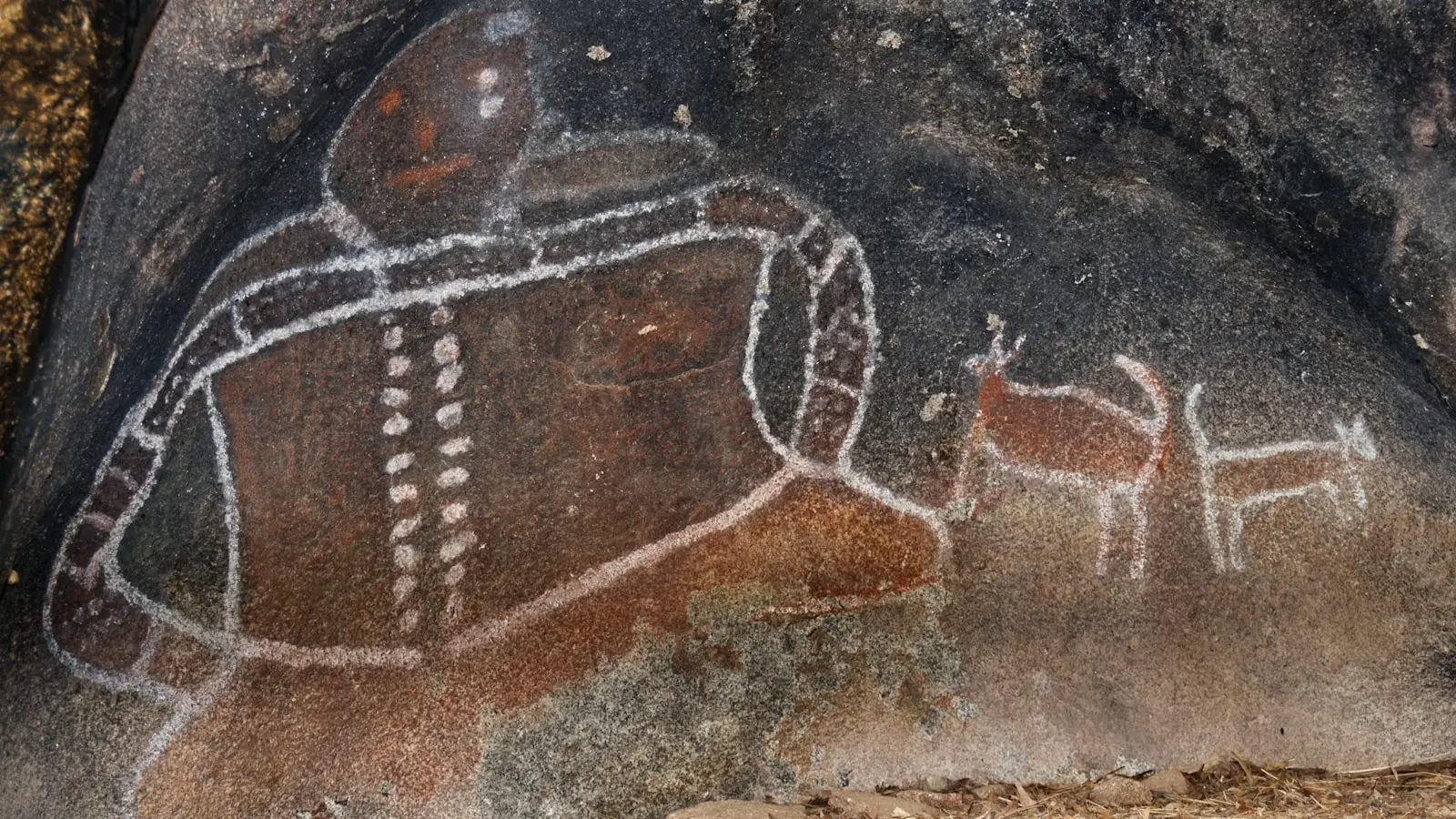
Aboriginal and Torres Strait Islander art represents one of the world's oldest continuous artistic traditions, with visual expression documented back at least 65,000 years. For First Nations cultures, art operates as a language system where knowledge, spiritual beliefs, and connection to Country are transmitted across generations. It works quite differently from many Western artistic traditions that value individual innovation or stylistic upheaval. Here, continuity, cultural authority, and deep ecological knowledge sit at the centre of how things work.
The earliest works include hand stencils and ochre paintings in rock shelters across northern Australia, particularly in Kakadu National Park in the Northern Territory. These pieces show a sophisticated grasp of animal behaviour, plant seasonality, and the sacred meaning of specific landscapes. Rock art traditions continue today, with Indigenous artists painting in caves and on rock faces, keeping the ancient practices alive in contemporary work. That unbroken chain from the past to now gives you a genuine window into how human communities maintain their cultural identity across thousands of years.
The Dreaming and Country: Spiritual Geography Made Visible
To get Indigenous Australian art, you've got to understand the Dreaming (also called Dreamtime or the Dreaming Law). It's a complex philosophical and spiritual framework that explains how the world came to be, how it operates, and what humanity's responsibility is to it. The Dreaming covers creation stories, law systems, kinship structures, and relationships with specific landscapes. These aren't metaphors or mythology in the Western sense. They're an ongoing reality that shapes how people relate to place, each other, and non-human beings. When you look at a contemporary Aboriginal artwork, you're usually seeing a visual expression of Dreaming narratives, where specific symbols, patterns, and compositions carry precise meanings that initiated community members understand.
For Indigenous Australians, 'Country' matters just as much. It's not just land in the geographical sense. Country is an intelligent, animate presence that people maintain reciprocal relationships with. Artists belong to particular Countries through kinship, law, and ceremonial responsibility. When an artist from the Kimberley region creates a work, they're exercising cultural authority over their ancestral territories and maintaining their custodial obligations. This creates a deep connection between the artist's identity, their community's wellbeing, and the health of the ecosystem itself. This is why two paintings depicting similar elements can carry vastly different significance depending on where the artists come from and what authority they hold.
Torres Strait Islander art also centres on connection to place, though the geography is maritime rather than terrestrial. Island identity, ocean knowledge systems, and the complex history of trade routes across the Torres Strait shape Islander artistic practices in distinctive ways. Aboriginal and Torres Strait Islander traditions share philosophical foundations around Country and spiritual connection, but they've developed different visual languages and knowledge systems reflecting their specific environments and histories.
Aboriginal Art: From Papunya Dot Painting to Today
Aboriginal contemporary art started getting real attention in the Western world around the early 1970s after something significant happened in Papunya, a remote Northern Territory community. Government policies were pushing economic development out in remote areas, so a group of men began painting Dreaming stories onto canvas and board using acrylic paints. This was a major change from the secret-sacred paintings made during ceremonies on the ground, but it wasn't about abandoning culture. These artists were being smart about it. They translated sacred Dreaming knowledge into paintings they could sell to outside buyers. That gave them economic stability and let them hold onto cultural authority when Indigenous communities were under serious pressure.
This movement became known as Western Desert art and it completely shifted how the world saw contemporary Indigenous art. The artists created their own visual language with concentric circles, dotted patterns, and symbols that still grab people today. The thing is, these works don't always tell complete stories. Indigenous artists intentionally hide certain sacred knowledge from people who shouldn't see it, so one painting can have multiple meanings depending on who's looking at it. A dot pattern might be purely decorative to one person, but to someone from the culture it represents water sources, ancestor beings, and ceremonial knowledge all at once. This layering of meaning is core to how Indigenous visual culture works.
Aboriginal and Torres Strait Islander artists today work in basically every medium and style you can name, including hyperrealist portraiture, abstract expressionism, video, installation, printmaking, and digital work. Artists like Rover Thomas, Emily Kame Kngwarreye, Sally Morgan, and Daniel Boyd have gained serious international recognition while staying connected to their communities' cultural knowledge systems. The arc from Papunya through to the current scene shows how Indigenous artists juggle the tricky business of protecting cultural protocols, making a living, and participating in global contemporary art conversations on their own terms.
Key Artistic Movements and Regional Aesthetics
Aboriginal art across Australia varies significantly by region, with each area developing its own distinct style. The Kimberley region in Western Australia is famous for X-ray paintings that show animals with their internal organs visible, a technique reflecting detailed zoological knowledge. Dot painting also comes from this area, though it differs from the work produced in the Western Desert. Up in Arnhemland, the Northern Territory, artists painted on stringybark using ochres and natural pigments. These bark paintings established practices that later influenced how artists worked with acrylics. The patterning in Arnhemland work is dense and visually complex, creating pieces of real sophistication.
Aboriginal artists from the Anangu Pitjantjatjara Yankunytjatjara (APY) Lands in South Australia developed their own acrylic style, as did communities in Western Victoria and New South Wales. Torres Strait Islander art carries maritime traditions, with boats, stars, and sacred sites as recurring motifs that connect to ocean life. In Melbourne, Sydney, Brisbane, and Perth, contemporary urban Aboriginal artists often combine traditional knowledge with modern urban experience. Their work tackles colonial history, identity and social justice alongside spiritual practice. Treating all Aboriginal art as one thing flattens something that's actually quite varied. Artists and communities themselves push back against this, and with good reason.
The Ethics of Collecting: Authenticity, Cultural Authority, and Supporting Communities
If you're buying Aboriginal or Torres Strait Islander art, there's a number of ethical stuff you should know about that doesn't really apply the same way in the regular contemporary art world. First up is authenticity and who has the right to paint what. Not every piece called 'Aboriginal art' is actually made by an Aboriginal artist, and even then, not every Aboriginal artist can paint whatever they want. In plenty of communities, particular people have the right to create works based on specific Dreaming stories and Countries. When you buy from an artist who actually holds that authority, you're supporting more than just them as an individual. You're helping their whole community maintain their culture and build economic security.
When you're looking at where to buy, the seller's track record matters a lot. Proper dealers, whether that's the big Australian galleries and art fairs or Indigenous-run spaces and websites, can tell you about the artist's background, their country, what they're allowed to paint, and where the money actually goes. Steer clear of works flogged off without proper information about where they came from or who made them. The Aboriginal Art Code of Conduct and the Torres Strait Islander Art Code of Conduct exist to set standards, but honestly the enforcement is patchy at best.
Putting your money into Indigenous-run galleries and art spaces means the cash actually reaches the communities and artists. Places like Boomalli Aboriginal Artists Co-operative in Sydney, Warmun Art Centre in Western Australia, and Ikuntji in the Northern Territory make sure the money flows straight to the creators and their communities. The big auction houses and galleries need to pull their weight too by giving proper information about artists and sorting out returns when communities ask for work back for cultural or ceremonial reasons. As a collector, asking tough questions about where the work came from and the artist's actual background isn't rude or unwelcome. It's exactly what you should be doing.
Encountering Aboriginal Art in Australian Galleries and Museums
If you're in Australia, seeing Indigenous art in galleries and museums gives you real insight. The National Gallery of Australia in Canberra has one of the world's best collections of Aboriginal and Torres Strait Islander art. You'll find everything from old bark paintings to recent video installations. The gallery explains what each work means culturally, which helps you actually understand it. State galleries like the Art Gallery of New South Wales in Sydney, the National Gallery of Victoria in Melbourne, and the Queensland Museum in Brisbane also have major Indigenous collections. These days many of these places hire Indigenous curators and advisors to work on how the art gets shown and talked about.
When you visit regional galleries, ask staff what's on permanent display and what gets rotated off. Some communities have rules about certain works because of what they mean culturally. Sacred pieces might not be photographed or shown for long stretches. These aren't just random rules. They're about how knowledge is meant to be shared within the right contexts. Learning why these boundaries exist actually makes the art hit harder. Most galleries run talks and tours led by Indigenous experts or artists. That's when you move past reading the label and start getting what's really going on.
These days you'll find Indigenous artists and curators showing work in contemporary galleries across the big cities. Places like Melbourne's Fortyfivedownstairs, galleries that are part of the Indigenous Art Code, and spaces run by Aboriginal artists let you see newer work and meet people pushing things forward. Following Indigenous-run art projects and reading Indigenous art critics gives you a better sense of what's actually happening, rather than just getting window-dressing inclusion.
The Global Impact and Contemporary Conversations
Aboriginal and Torres Strait Islander art has deeply influenced how we talk about contemporary art globally, though most art history textbooks don't acknowledge it. Indigenous Australian artists have explored abstraction, symbolism, and the relationship between spiritual knowledge and visual form in ways that matched or even came before similar work by European modernists. The problem was colonial attitudes. Western institutions treated Indigenous work as craft or anthropological material rather than serious contemporary art. Today's scholars are fixing this. They recognise that artists like Emily Kame Kngwarreye were doing complex work with abstraction and colour that deserved the same respect as anything happening internationally at the same time.
Contemporary Indigenous artists are part of global art conversations but keep their cultural roots strong. They make work about climate change, colonialism, digital technology, and identity, grounded in their own traditions. That's not a contradiction. It makes sense. Knowledge systems built over tens of thousands of years have real insights for today's problems. Some artists deliberately use materials and styles that work across different audiences while hiding meanings that only initiated community members will fully grasp. This way they keep control over their intellectual and spiritual property, even when selling in international markets.
If you're interested in art, recognising these connections means you'll appreciate the work more deeply. Look out for international exhibitions with Indigenous Australian artists, read what Indigenous art scholars and curators actually write about the work, and find what the artists themselves say about their pieces. That's how you engage with it properly. The conversation around Indigenous Australian art keeps changing, and communities now have more say in how their cultural knowledge gets shown and shared. It's a good development. It makes the whole art world smarter and more ethical.
Getting more out of it: Resources and ongoing learning
You won't develop a real understanding of Aboriginal and Torres Strait Islander art from a quick museum visit. It takes sustained engagement. Books and catalogues by Indigenous scholars and curators like Margie West and Djon Mundine offer perspectives you simply won't find elsewhere. Keeping up with blogs and publications focused on Indigenous Australian art, checking in with galleries' mailing lists, and catching public programmes as they happen all help you stay across the field as it evolves and new artists emerge.
If you want to visit remote communities and see art where it's made, there are organisations that arrange ethical cultural tourism and artist residencies. It takes thought and real respect for what communities want, but done properly these experiences can't be beaten. You can also back artists directly by buying their work from galleries, art fairs, or online platforms run by the communities themselves. That's money going straight to them.
At its heart, appreciating Aboriginal and Torres Strait Islander art means understanding that these aren't museum pieces frozen in time, but living practices connected to some of the world's oldest continuous cultures. Today's artists carry thousands of years of knowledge and apply it to what's happening now, globally and locally. Coming at this work with genuine curiosity, a bit of cultural humility, and openness to learning different knowledge systems will get you somewhere much richer than just looking at it as decoration. This kind of art actually shifts how you think about creativity, culture, and what Country means.