
Art & Culture
The Art of Still Life: A Quiet Australian Tradition
1 June 2026
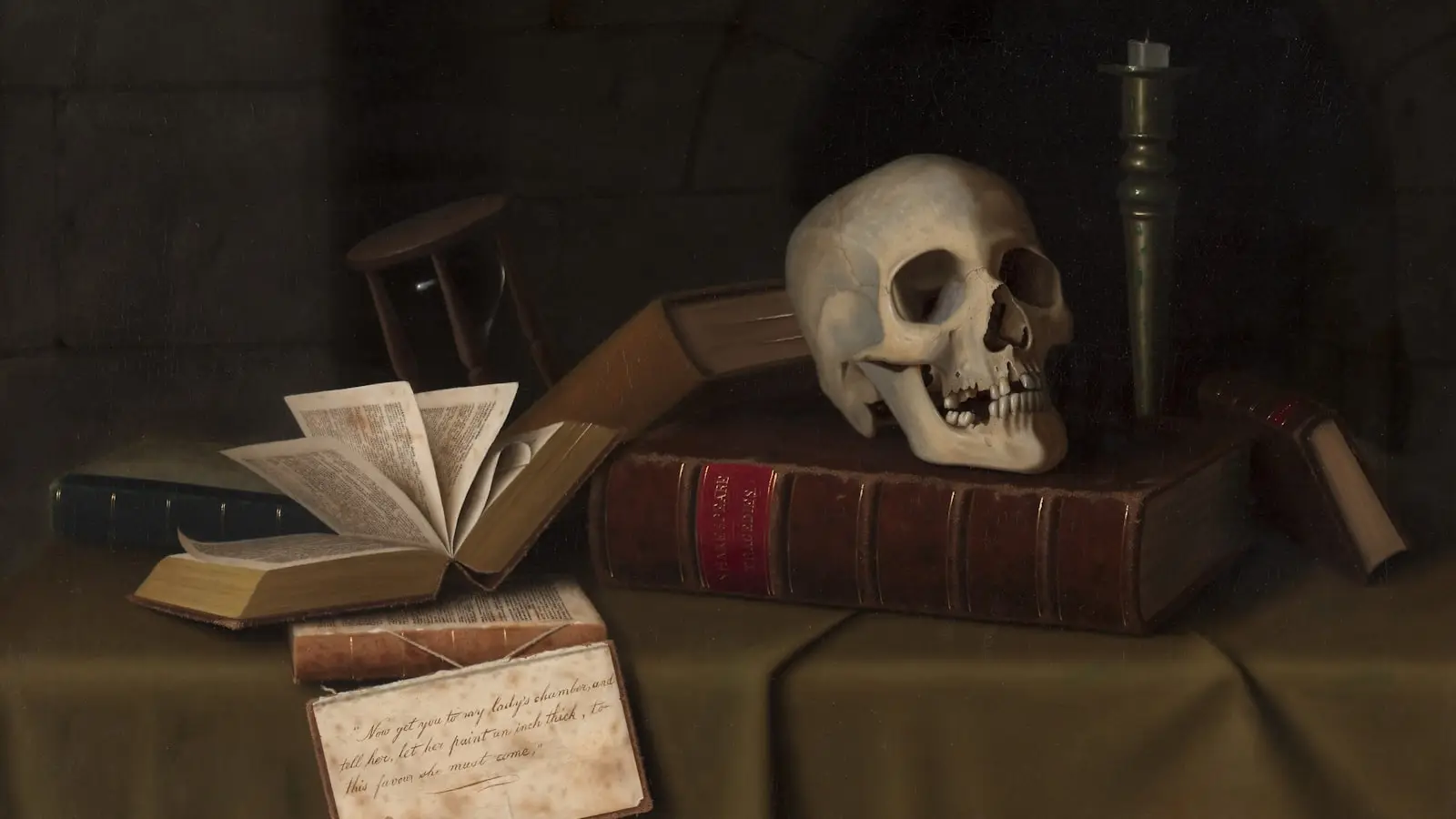
Still Life in Australian Art: An Often-Overlooked Heritage
Still life painting gets a rough deal in Australian art history. Landscape paintings steal the glory, portraiture hogs the attention, but still life has been there since the start of European settlement. Colonial artists painted it, contemporary ones still do in Melbourne, Sydney and everywhere else. Yet it never quite gets the same respect, even though plenty of technical skill and real ideas sit behind it. The Heidelberg School made a big noise internationally with all those gum tree landscapes, which meant still life kind of faded into the background despite what it could do.
What makes Australian still life interesting is how it reckons with light, place and what grows here. Artists dealt with native plants, the hard brightness of Australian sunlight, and the complicated feelings that come with colonial and postcolonial identity. That's different from what European and American painters tackled. You see it in detailed paintings of Australian flora, in stark modernist compositions of everyday objects, all working through bigger questions about art in this country. That approach shows how artists have made sense of where they belong, displacement and what's possible creatively within Australian conditions.
Colonial Beginnings and the Documentation of Empire
Australia's still life tradition started up right alongside colonial expansion. Early European artists, some officially commissioned and others just working on their own, set about documenting the unfamiliar plants and minerals they found here. Margaret Dumont and John Lewin produced precise studies of flowers, shells and native birds that worked as both scientific records and artworks. These paintings did two jobs at once: they showed off European artistic skill while also cataloguing what the colony had to offer. Making them required serious technical ability, but people often just treated them as illustrations or scientific documents rather than proper art.
Still life worked well for this kind of documentation because it let artists focus on individual specimens and paint them clearly. Well-to-do colonial families and institutions bought these paintings to show they had taste and learning, displaying them in their homes alongside paintings shipped in from London and Paris. Yet something specifically Australian was taking shape: a distinctive way of handling colour, composition and depicting unfamiliar plants. By the mid-1800s, as the colony grew and changed, still life became an acceptable if fairly traditional pursuit, taken up by skilled female artists especially, many working in homes and institutions across Sydney, Melbourne and Adelaide.
The Modernist Shift: Still Life as Formal Experiment
In the early twentieth century, Australian artists started taking still life seriously as modernist ideas filtered over from Europe. Artists began picking apart how representation actually worked, moving away from the straightforward documentation approach. Cubism, Fauvism and abstraction opened new possibilities. Melbourne's intellectual art circles, especially around the Contemporary Art Society, made still life the go-to form for testing ideas about composition and colour theory, and for asking what representation could do. Still life had a real advantage over other subjects. Landscapes carried all sorts of baggage about land and identity, and figure painting demanded narrative. But a bowl of fruit or a handful of objects? That let artists focus purely on how paint worked and what formal choices could achieve.
Margaret Preston stands out from this period. She took modernist approaches seriously while also engaging with Australian indigenous art and design in ways that weren't just borrowing from Europe. Her still lifes, with native flowers and objects arranged in bold colours and flattened space, show real artistic development rather than mimicry. She made still life intellectually demanding, technically skilled, and genuinely Australian. Other artists followed her lead, ranging from sparse, almost severe compositions to loose, colourful explorations of pattern and form. Still life became legitimate artistic territory during these years, a space where artists could work through modernism without the complicated questions that landscape painting raised about nationalism and who the land actually belonged to.
Mid-Century Developments: Domesticity and Abstraction
Between the 1950s and 1970s, Australian still life took some striking turns. Artists were working through post-war movements and reckoning with changing ideas about domesticity and what still life meant as a form coded feminine. In Sydney's more adventurous artistic circles, some painters threw themselves into abstraction, using still life as a springboard but abandoning any attempt to represent actual objects. Others stuck with representation but loaded everyday domestic scenes with psychological and formal complexity that made their apparent simplicity fall away. The push and pull between these directions created genuine creative friction, with still life becoming a space where old and new approaches rubbed up against each other.
The postwar period also sharpened awareness of still life's gendered roots. Women painters had long dominated the field, working from home, and the genre carried baggage: private, minor, feminine. This made it hard to get serious critical respect. By mid-century, though, those very associations opened up possibilities. Artists could use the form to question what counted as serious art and explore how representation itself worked. Painters working in Melbourne and Sydney during this stretch made still lifes that weren't flinching behind tradition or chasing modernism for its own sake, but genuinely wrestling with what the form could do. Their work showed up regularly at places like the Art Gallery of New South Wales and got serious critical attention, even if still life never quite shook its second-tier status in the broader story of Australian modernism.
Contemporary Still Life: Identity, History and Materiality
Australian artists today keep coming back to still life because it's genuinely useful for serious artistic work. They're drawing on postmodernism, feminist art history and concerns about identity, sustainability and representation. Rather than moving away from the tradition, a lot of significant practitioners have gone back into still life painting and photography, using it to question inherited ideas about beauty, worth and cultural value. Across Australian galleries, you'll see still life works that engage with indigenous perspectives, migrant experiences, environmental concerns and the politics of how we display and collect things.
Artists now recognise that still life has distinctive possibilities for addressing what matters today. A painting of household objects can be a meditation on consumerism or environmental crisis. A photograph of flowers might incorporate commentary on the history of botanical representation and its imperialist dimensions. An arrangement of found materials speaks to obsolescence and value systems. This intellectual and visual energy shows that still life remains alive precisely because its conventions are now far enough removed from contemporary artistic concerns that they actually need genuine rethinking. The genre is more open to interpretation than it's ever been, and more capable of carrying complex meanings about who and what we value, how we represent the world, and what beauty and significance might mean in contemporary Australia.
Technical Mastery: Why Still Life Remains Artistically Demanding
A lot of people reckon still life is easier than landscape, portraiture or history painting, probably because it got lumped in with domestic hobbies and women's work back in the day, stuff that didn't get taken seriously. They're wrong. It's actually brutally hard. You need sharp observation skills, a solid grasp of colour and composition, and real technical chops. The painter's got to pull off glass, ceramics, fabric, skin, metal, all within one cohesive space, juggling tricky light and depth across a tight area.
Working from an actual arrangement rather than memory or imagination actually makes it tougher, not easier. Small shifts in tone matter. The angle of a dropped petal matters. How light bounces off glass matters. There's nowhere to hide in a confined still life, and mistakes stick out like a sore thumb. Contemporary Australian painters working this way show exactly what it takes. Their pieces in major galleries have incredible subtlety and colour work, and the compositions that look simple turn out to be meticulously thought through. If you care about technical skill and seeing real artistic craft, still life delivers the goods.
Where to find Australian still life paintings and prints
The Art Gallery of New South Wales and the National Gallery of Victoria both have solid still life collections spanning the colonial era through to recent work, though you'll often need to hunt past the main exhibitions to find them. Most of Australia's regional galleries hold local still life pieces too. A trip to places like Bendigo, Ballarat or the Central Coast museums can turn up some interesting work shaped by local artistic traditions. Melbourne and Sydney have plenty of smaller galleries in the inner suburbs showing contemporary still life, especially photographers and mixed media artists exploring the form in new ways.
If you can't get to galleries, many major Australian institutions have put their collections online now, including good numbers of still life works you can browse from home. Australian art magazines and exhibition catalogues sometimes run pieces on still life history that help you make sense of individual works. For collectors keen to buy, specialist Australian art galleries are your best bet, and you should also keep an eye on auction house sales where still life paintings and photos come up fairly often. The market for Australian still life is pretty accessible compared to some other styles, so there are genuine opportunities to pick up quality work at various price points.
Still Life and the Australian Landscape: An Unexpected Conversation
Australian artists have long grappled with an odd tension between landscape and still life. Landscape painting dominates Australian art history and sits at the heart of how we think about national identity, but still life offers something quite different. It's intimate, manageable, and sidesteps the baggage landscape carries around land ownership, nation and belonging. Yet the split isn't clean. Many Australian artists have worked in both genres, and the same preoccupations show up in each: how light behaves, what we notice when we look closely at things, how to capture the Australian environment. A vase of native wildflowers is really a miniature landscape, bringing that same interest in local plants and antipodean light into the domestic space.
This comes into sharp focus when you look at how Australian artists have used indigenous plants and materials. Margaret Preston painted native flowers in modernist still life compositions, trying to anchor modernism to Australian soil through local botanical detail. Artists today carry on this work, arranging still life to probe our ties to country, indigenous knowledge and how we represent things without landscape painting's uncomfortable colonial history. The interior becomes a place where you can rethink Australian identity on different terms. Seeing these two traditions together actually deepens how you understand each one, showing how Australian artists have found the full toolkit of available forms to explore what place and belonging really mean.