
Collecting
Investing in Art: What Australian Collectors Should Know
1 June 2026
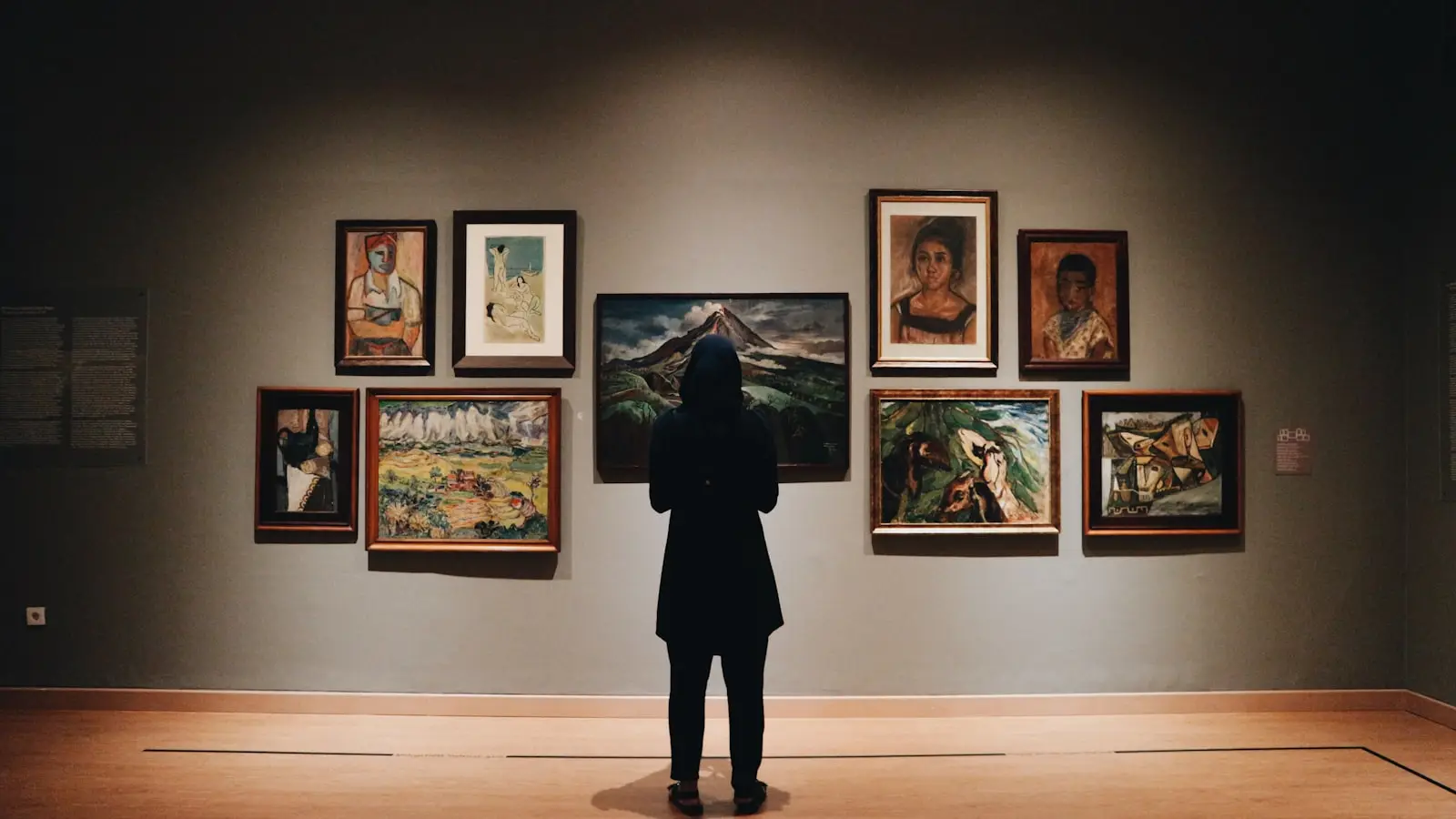
Art Investment in Australia's Market
Art is a strange beast in wealth management. Unlike shares or property, it doesn't generate income, but collectors worldwide keep pouring serious money into it. For Australian investors, things have changed. The local art scene has matured, and Australian artists now attract genuine international interest. Buying art isn't just speculation. You're acquiring cultural assets that appreciate in value, look good at home, and support the artists creating them.
The Australian art market has transformed over the past twenty years. Sydney and Melbourne now carry real weight in the Asia-Pacific contemporary art world. Auction houses, artist collectives, and independent galleries together form a functioning market. Collectors who bought early and picked work by artists now shown in major public institutions have seen solid returns. Beyond that, they've created meaning around their collections, turning investments into genuine engagement with how contemporary art actually works.
To invest in art seriously, you need to understand how the market ticks. Artist exhibition history and institutional recognition matter. So do provenance, condition, current demand, and what critics and curators are talking about. Australian collectors have a real edge here. You can meet emerging and established artists in person, visit galleries and artist studios, and have conversations with the people making the work. International collectors don't get that easy access.
Building Your Collection: Strategic First Steps
Be clear about what's driving you before you start spending money. Do you genuinely love the art and see investment as a bonus? Or is this mainly a financial play? That answer determines everything: how much you'll budget, which artists interest you, where you'll look. Most Australian collectors who've done well say their smartest purchases happened when they actually connected with the work itself, not when they were chasing what was hot at the time.
Spend time looking before you spend serious cash. Hit galleries regularly. Not just the big names, but artist-run spaces, public galleries showing contemporary art, and regional venues in places like regional Victoria, the Blue Mountains, and the Gold Coast where art communities are still going. Catch artist talks and opening nights. Look at what's happening now and what's come before. Subscribe to art magazines, keep an eye on auction results, use online sales trackers. None of it costs anything, and it keeps you from dropping money on duds.
When you start buying, split between emerging artists you genuinely rate and artists with a solid exhibition record. A sensible split for most people: about 60% of your early budget on artists with established track records and growing market interest, and 40% on younger artists you reckon have potential, knowing you're taking on more risk for the chance of bigger gains. Go for works on paper, photographs, or smaller sculptures at first rather than sprawling paintings. They're easier on the wallet but still hold their value and grow.
Build variety into what you collect. Get different mediums in there: painting, photography, installation, video, sculpture. Spread across different states: New South Wales, Victoria, Queensland, Western Australia. Include artists at different points in their careers, both established and up-and-coming. That way if one market cools off, you're not completely exposed, and your collection actually tells the story of how wide contemporary Australian art really is.
Australian art galleries and collecting scenes
Australia's art scene stretches well beyond Sydney's Paddington, Melbourne's Brunswick and Fitzroy, or Brisbane's South Bank. Sure, those places pull in big money and house the major galleries, but there's serious artistic activity happening right across the country. Hobart, Perth, Adelaide, and Canberra all have thriving contemporary art communities with their own character. Regional New South Wales produces excellent artists whose work often costs less than comparable Sydney pieces, mainly because collectors tend to stick with the city gallery circuit.
The type of gallery you deal with makes a real difference when you're getting into collecting. Commercial galleries operate as businesses, taking a cut while looking after artists and building their collector networks. Artist-run spaces and collectives work on a different model, usually through membership or grants, and they tend to take bigger curatorial risks. Auction houses come in two flavours: the big international operations with Australian offices and the local outfits, each offering their own advantages in terms of pricing and paperwork. Public institutions focus on curation and research over sales, but they're invaluable if you want to see which artists are getting proper institutional backing.
Having good relationships with gallerists and advisors actually matters. A gallerist you trust reads your taste, rings you about relevant works, and explains what artists are doing and where they sit commercially. The good ones educate and buy for individual collectors rather than just shifting stock. It takes time to build these relationships, sure, but it pays off. You get first look at pieces, get tipped off about what's coming, and get honest feedback on value and growth potential.
Evaluating Artists: Beyond the Hype
Not every artist with a decent artist statement and polished work will actually have a lasting career or see their pieces go up in value. Telling genuine artistic progress apart from temporary trends means checking a few things. Exhibition history matters a lot. Has the artist shown in proper galleries, art fairs, and public institutions? Are they building something consistent, or just knocking out novelty pieces? What do actual critics and curators say about their work? When major museums or public galleries buy from an artist, that means something real is happening in ways sales figures alone don't quite capture.
Watch how an artist's practice changes year to year. Young artists who hit the market suddenly often vanish just as quickly when the trend dies. More reliable is a steady climb: emerging shows in smaller galleries, then more institutional interest and art fair gigs, then bigger gallery backing, then auction house inclusion. This gradual progression usually points to real artistic development and different levels of collectors taking notice. An artist whose work floods the market then disappears probably just rode a wave instead of making something that lasted.
Context shapes an artist's career in ways collectors need to understand. Aboriginal and Torres Strait Islander artists operate within particular market structures and curatorial frameworks. Women artists have traditionally sold for less than male counterparts, though things are slowly shifting, which makes them worth watching if you want solid work at the price correction stage. Contemporary artists from non-Western backgrounds, including Asian-Australian practitioners, have picked up serious institutional support recently, so that's an area worth paying attention to. Getting these contexts right stops you overlooking important work and helps you understand what you're actually looking at.
Always see works in the flesh before you buy. Photos, even good ones, don't show scale, texture, colour, or how the piece sits in a room. A painting might sing on your screen but feel different when you're standing in front of it. Seeing work hung in a gallery, next to other pieces, how light catches it, teaches you stuff no image can convey. That's why it's worth getting to know your local galleries and turning up to openings.
Practical Considerations: Condition, Provenance, and Authentication
Before you buy a work, you need to look at three things: what condition it's in, where it's come from, and whether it's genuine. Checking condition either means you know what you're looking at or you get a conservator to have a look. Don't shy away from the awkward questions. Has it been damaged at some point? Repaired? Cleaned? How does it sit compared to when it was first made? If it's on paper, scan for stains, water damage, or fading. With paintings, check for cracks, paint lifting, or paint jobs from years back. Dodgy condition means conservation costs that'll eat into what you've actually paid, and some conservation work can tank the value. Make sure you understand what's wrong before you hand over the money.
Provenance is basically the ownership story, and it affects both what the work's worth and whether it's legitimate. The gold standard is a clear line of owners stretching back to the artist, backed up by paperwork at each step. For artists who've been around a while, galleries usually have this sorted. Auction catalogues lay out the provenance when you're buying at auction. Watch out for works with gaps in the record or fuzzy ownership changes. Gaps aren't automatically a reason to walk away, but they're worth looking into. For contemporary art by artists who are still alive, you can usually ring up the artist or their gallery and confirm things.
Authentication matters more as your collection gets bigger. For established artists, galleries and artists themselves keep records. A lot of Australian artists now run registries to keep fakes at bay. If you're after a serious contemporary piece or something by an artist who's no longer around, you'll want proper authentication paperwork. When authentication's dodgy, you need to factor in the costs and risks. Professional authentication runs a few hundred to a few thousand dollars depending on what you're buying. It's cheap cover for something worth real money. Same goes for a professional appraisal, it's worth the outlay.
Buying from Auctions and the Secondary Market
Secondary market auctions let you buy work that's already been owned and is being sold again. This is how you can get hold of established artists that galleries don't stock. Major auction houses like Sotheby's and Christie's have offices in Sydney and Melbourne, and they move serious contemporary art, though buyer premiums and shipping costs add up fast. Smaller regional auction houses run sales with lower entry prices and less bidding pressure, so if you're paying attention you can occasionally find overlooked pieces. Learning to read estimates and assess what things are actually worth just takes time and repetition.
Attend the pre-sale viewings and look at the work in person. You get to check condition without anyone trying to talk you into it, and you can form your own sense of value separate from what the auction house is suggesting. Their published estimates are a guide but not gospel. Markets often disagree strongly with the pre-sale numbers, which creates openings for collectors who know what they're looking at. Track what similar pieces by the same artist went for previously. That gives you an honest baseline for what to expect, unlike gallery prices which have generous margins built in.
Auction buying is different to gallery buying in important ways. You're purchasing from a previous owner with no relationship to the artist, so you don't get the same condition checks or provenance assurance a gallery offers. But because bidding happens openly and results get published, there's no hidden markup. The price discovery is real and the results are public, so you can actually learn what work is trading for. Bear in mind that auction houses set estimates strategically to spur bidding, so the starting point is consistent but not always honest.
Storage, Insurance, and the Practical Side of Collecting
Art needs proper care to stay in good condition and hold value. Climate control matters: heat and humidity swings damage everything. Paintings like steady temperature (roughly 18 to 21 degrees Celsius) and humidity (around 50%), with low light. Works on paper hate light damage, dust, and insects. Photography needs the same treatment. Don't store art in ordinary cupboards or basements. Use climate-controlled art storage facilities. Several Australian cities have professional art storage that keeps proper conditions, provides security, and handles insurance. For serious collections, this costs a few hundred to a few thousand dollars yearly depending on size and specs, and it's worthwhile protection against damage.
Proper insurance isn't optional for valuable collections. Standard home contents insurance either excludes art or doesn't cover anything serious. Fine art insurance is specialised and requires detailed records of what you own: photos, descriptions, valuations, purchase documentation. Insurance companies often want professional appraisals for valuable items. Keep this documentation safely away from home, maybe in a safe deposit box or secure cloud storage. Many collectors maintain spreadsheets listing their collection with images, artist details, purchase prices, insurance values, and provenance notes. This documentation serves several purposes: claims if something gets damaged, estate planning, using art as collateral for loans, and simply knowing what you own.
Documentation is part of your collection's infrastructure. Get professional photos when you acquire work. Write notes about why you bought each piece, where you found it, any attached stories. This transforms your collection from objects into memories and meaningful decisions. Many collectors find this documentation becomes one of collecting's real pleasures, reliving the discovery process alongside the work itself.
Art Investment Returns: What's Realistic?
Art can make money, but it's unpredictable. Some collectors have bought work by artists who went on to get serious museum attention and decent resale value. Others spent good money on pieces that never moved in price, no matter how good they actually were. Unlike stocks, there's no formula to work out what art will return. It all comes down to whether people want it in the future, what the art world decides matters, and market conditions nobody can predict with any confidence.
The data on art returns is messy and people argue about it constantly. Some research suggests fine art performs as well as shares over many years, but it's far more volatile and a lot harder to sell when you need the cash. That's why art shouldn't be your only investment if you're counting on reliable income in retirement or steady growth. It works better as part of a mixed portfolio, especially for people who actually want to live with the work, learn about the artists, and engage with the art scene. Then the money side becomes a nice side effect rather than the whole reason you bought it.
Some Australian contemporary art has climbed in value more than others, though cycles shift things around. Sydney and Melbourne artists with real museum support tend to hold or gain value more reliably than speculative bets on unknown emerging artists. Photography and works on paper have sometimes been overlooked compared to paintings, which means savvy collectors can find quality pieces at better prices. Aboriginal and Torres Strait Islander art has done well over the long term, though it operates differently and you need to understand the cultural context properly. Rather than chasing what you think will trend next, the best collectors focus on quality, condition, and what they genuinely believe in. The financial returns usually follow.
Building a Collecting Community and Long-term Engagement
The best bits of collecting rarely come from the acquisitions themselves. It's the people and conversations around art that matter. Australian art has grown largely because collectors actually engage with the wider art world: showing up to artist talks, backing emerging artist residencies, getting behind artists they rate. Plenty of significant Australian artists have built their careers partly because collectors bought their early work, pushed for them, and gave them stability to keep going. That's the sweet spot in collecting: you pick up cultural knowledge and your eye develops, while the artists get support to do what they do best.
If you're serious about this, get involved with collector groups or art societies where you live. Sydney, Melbourne, Brisbane, and Perth all have active organisations running education, events, and knowledge-sharing. You'll get access to private viewings, artist talks, and hear what other collectors think, which sharpens both your knowledge and your buying choices. Jumping into the broader art conversation through social media, magazines, gallery openings, or just yarning with gallerists turns collecting from something you do alone into proper engagement with art as it's happening now.
The thing about collecting over years is you can look back at what you bought and see things differently. That painting from ten years ago might make more sense now than it did then, especially as your own taste shifts. Interestingly, some collectors find their earliest purchases, which were sometimes braver and definitely cheaper, can look pretty good in hindsight. Thinking about how your collection has changed, which artists you kept going back to, which galleries mattered in your journey, tells you something about yourself. Your collection becomes a kind of story about what you valued over time.