
Art & Culture
How to Read and Appreciate Abstract Art
1 June 2026
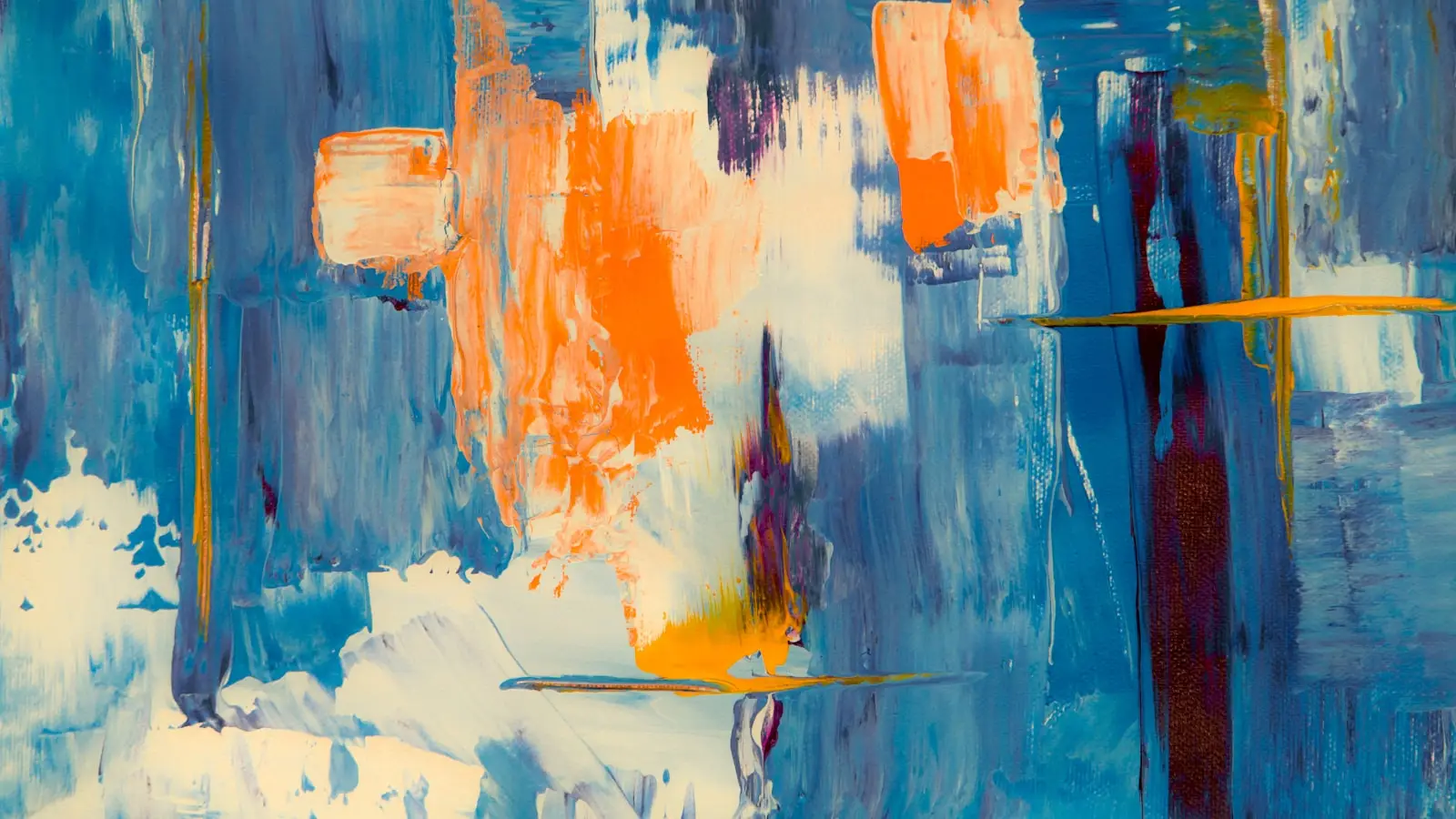
What Makes Abstract Art Different?
Walk into a gallery in Melbourne, Sydney, or Brisbane and you'll see canvases splattered with bold brushstrokes, floating shapes, or blocks of colour. Standing in front of one, you might wonder what you're actually looking at. Abstract art, or non-representational art as some call it, deliberately sidesteps depicting real objects or scenes. Instead, it focuses on colour, form, texture, line, and composition as the main event.
For centuries of Western art, artists were judged on how well they could recreate the world on canvas, how convincingly they could make a painting work like a window into reality. Abstract art threw that out the window. It argued that the work itself, the physical marks and emotional punch of it, the way shapes and colours relate to each other, could mean something without looking like anything in particular. That shift opened up a whole new way of thinking about what art could do.
Looking at abstract art requires you to shift gears as a viewer. You're not hunting for hidden pictures or trying to figure out what something represents. You're engaging with the visual elements directly and whatever feelings they spark in you. It's not always simpler than understanding representational work, but once you stop expecting it to be something else, there's a real payoff to it.
Learning to Look: Slowing Down in the Gallery
Most people rush past abstract work in seconds. With a painting of something you recognise, your brain clocks it straight away and you're done. Abstract art demands patience. Give it five, ten, or even fifteen minutes if it grabs you. That's not dithering. That's just the speed at which this kind of looking needs to happen.
Before you start overthinking things, just stand there and feel it out. Does it feel energetic or quiet? Warm or cool? Is it pulling you in or keeping you at arm's length? These gut reactions matter just as much as any clever analysis. The artist picked those colours, shapes, and textures on purpose to stir something up in you. Your immediate response is the whole point.
Next comes straightforward looking. What's actually in front of you? Bold colours or muted tones? A busy surface or a spare one? Can you see the artist's hand at work, the traces of where they've marked the canvas? Are there geometric shapes or curved, flowing stuff? Is it smooth, thickly painted, thinly glazed? Which bits feel alive and which ones feel settled? By just noting down what you see, you're building the vocabulary to get what the work's actually doing.
Understanding Colour as a Primary Language
In abstract art, colour does the job that recognisable shapes do in other kinds of painting. Take a colour field work: it might look straightforward, just a canvas mostly covered in one shade or gentle transitions between similar tones. But that surface simplicity hides something more complex underneath. Your eye doesn't process colour on its own. A red looks completely different sitting next to another colour than it does by itself. The warmth or coolness of a colour, how bright or dull it is, how saturated it feels, all of that changes based on what's around it.
{"text":"Australian abstract painters understood this ages ago. The light across Australia is pretty particular: it's sharp and strong, and it shifts depending on location, tropical areas, the red interior, or the southern regions. Local artists over the years have picked up on this special quality of light. When you look at abstract work by an Australian artist, you often feel a connection to landscape colour underneath it, even though there's no actual landscape in the picture. The reds might feel like earth, the blues like sky, or the silvery greens might remind you of eucalyptus trees, but nothing's drawn literally."}.
Look closely at what colours do when they're next to each other. Do contrasting shades make the surface vibrate and hum? Do similar tones sit quietly together? Some abstract artists use colour to suggest depth, pushing warm colours forward and cool ones back. Others use colour to get across a feeling instead. Once you start reading colour as its own language, abstract work suddenly clicks into focus differently.
Form, Composition, and Visual Architecture
Every artwork sits within some kind of compositional structure, whether it's abstract or not. Where things are placed, how they talk to each other, and where they sit relative to the canvas edges all make a real difference. With abstract work especially, when there's nothing recognisable to latch onto, composition becomes genuinely critical. Put an element off to one side and you get tension. A grid gives you order and logic. Diagonal lines can feel like movement or discomfort. Perfect symmetry might come across as calm, or it might feel stiff and artificial depending on what you're looking at.
Abstract forms split into roughly two camps. Geometric abstraction uses clean lines, precise shapes, and mathematical relationships to suggest order and logic. Gestural abstraction leans on expressive marks, loose brushwork, and organic shapes that often feel more raw and human. Most works actually blend both approaches together. Getting to grips with these formal ideas helps you see not just what was made, but what kind of experience the artist was actually after.
The relationship between figure and ground, between what sits forward and what's behind it, matters a lot. Sometimes the background is just as important as what's in the foreground. A single small mark can grab your eye on a massive canvas through colour or where it's placed. A packed, busy composition can still feel perfectly balanced. Australian galleries show all sorts of compositional approaches that reflect both what's happening internationally and ideas that have developed here locally. Spend time looking at how each artist has arranged the visual space and you'll get a better sense of what they're actually trying to do.
The Artist's Hand and Process
Abstract art lets you see how it actually gets made. With representational painting, the technique usually hides behind the subject. With abstract work, you're looking right at the paint itself, the marks, the surface texture. What you see there tells you plenty about what the work means and how the artist went about making it.
Different techniques create completely different results. Precise geometric work has a totally different feel from loose, gestural painting. Paint that's built up in layers shows you a process of change and revision over time. A perfectly smooth, flat surface suggests something else entirely, maybe minimalist ideas or maybe just commercial production methods. Some abstract artists, particularly those interested in action painting or expressionism, want you to see the energy and physical effort that went into it. Others focus almost entirely on the finished product, keeping the process pretty much invisible.
When you're looking at work in Australian galleries, watch for the details. Can you actually see the canvas edges and how thickly the paint sits? Does the texture change depending on where you stand? Do the notes next to the work tell you anything about how the artist made it or what materials they used? Once you know how something was made, whether from details you can see yourself or from artist statements and exhibition information, you understand it in a much richer way. Australian artists working everywhere from Sydney to Perth tend to put real emphasis on how paint and surface actually feel and look.
Context, Movements, and Historical Positioning
Abstract art didn't appear out of thin air. You get a lot more from individual works when you know something about the artistic movements and historical moments that produced them. Abstract expressionism came out of post-war New York, partly driven by new ideas and big existential questions about what art could be. Minimalism then came along partly as a pushback against abstract expressionism's heavy emotional weight, focusing instead on clean lines and simple forms. Colour field painting, geometric abstraction, kinetic art, and constructivism all came with their own set of ideas and visual approaches, and the list goes on.
Australia's got its own solid track record with abstraction. Our artists have picked up ideas from international movements but also done their own thing. The particular light here, the landscape, a certain independence we've developed partly because we're so far from everywhere else, and where Australia sits culturally have all shaped how abstraction took root here. When you go to galleries in the big cities, they'll usually tell you which movements an artist was working with or pushing against. You don't actually need this context to enjoy looking at a work, but it definitely helps you work out what was going through the artist's head and what they were responding to.
You don't need to be an art history buff to engage with abstract work, but a bit of knowledge about major movements and key ideas makes a real difference. Most gallery websites, catalogues, and display labels give you straightforward information you can actually understand. Books and articles on abstract art are easy enough to find. The more you grasp about why artists made the choices they did at particular moments in time, the more you can see the genuine thought and intention in each piece. Knowing the backstory turns abstract art from confusing decoration into something that actually matters culturally.
Developing Your Own Interpretive Skills
Here's the thing about abstract art: there's no single right way to read it. The artist makes the work with certain ideas in mind, but once it goes out into the world, it's not theirs alone anymore. Your take on it, shaped by your own life, background, taste, and whatever mood you're in that day, is valid. That said, you do need to actually look at the work properly. You're not trying to figure out what the artist 'really meant'. You're having a genuine exchange with the piece itself.
Get better at interpreting art by looking at abstract work regularly and paying attention to how you respond. What keeps drawing you back? Are you more drawn to certain colours, shapes, or how things are arranged? Do you prefer geometric and controlled work, or something looser and more expressive? Does minimalism appeal to you, or do you like work that's fuller and more loaded? These likes and dislikes aren't mistakes or signs you don't get it. They're clues about how you work as a viewer. The smart move is to stay true to what appeals to you while staying willing to sit with work that doesn't grab you straight away.
Take a notebook to galleries and keep it simple. Write down your first thoughts about pieces, describe what you see, jot down questions or connections. Over time you'll notice patterns. You'll figure out which movements, artists, or styles actually matter to you. Your eye gets sharper and more specific. And you'll realise abstract art isn't locked away behind some invisible door. It's genuinely rewarding once you give it proper attention. Australian galleries, from the big institutions to smaller ones dotted around the regions, give you plenty of chances to build this habit.
Building a Personal Practice of Abstract Viewing
Getting comfortable with abstract art just takes time and looking at it regularly. If you're in or near a major Australian city, take advantage of the public galleries and contemporary spaces that focus on abstract work. If you're regional, find whatever gallery spaces are around and make a habit of going back. Every time you look at a piece, even if it's the same one you've seen before, you catch something you didn't notice last time. Details pop out, you might feel something different, and you start linking it to other work you've experienced.
Hunt down reproductions online and in books as well. Read what galleries say about their shows and what art writers think. Follow artists whose stuff appeals to you. Catch artist talks and gallery discussions when they're on; hearing an artist or curator explain their thinking reveals things you'd miss on your own. That said, all that background material just adds to what you get from standing face to face with the real thing. There's no substitute for being in the same room as an actual artwork, in that moment and space.
Trust your gut reaction. If you find yourself confused or annoyed by an abstract painting, that's normal; abstraction isn't always easy. But give the work some time, and give yourself some time too. Something that feels unclear at first might click once you've sat with it. And if a work just doesn't do anything for you, that's fine as well. You don't need to like all abstract art or work it all out completely. The point is to look carefully, to let it change how you see things, and to expand what you're capable of feeling through looking. When you do that, you'll realise abstract art gives you some of the most direct and distinctive experiences you can get in a gallery, anywhere in Australia.
Common Misconceptions About Abstract Art
People often reckon abstract art is dead easy to make. They think you just splash paint around and call it done. That's rubbish. Making abstract art that actually works is bloody hard. You need real skill and a solid sense of what you're doing. Colour, balance, texture, rhythm, how things sit on the canvas, all that stuff matters massively. When you're not showing recognisable things, everything else has to pull its weight. There's nowhere to hide.
Another one is that abstract art is cold and emotionless, all brain and no heart. That's just not true. Plenty of abstract artists were chasing genuine feeling through non-representational work. The abstract expressionists knew what they were doing in that regard. A gestural piece carries real physical energy. A colour field painting can hit you emotionally hard. You don't need to see something recognisable to feel something. In fact, abstract work often gets straight to the emotional gut in ways that representational art can't match, precisely because it has to communicate through pure visual means.
Some people worry they're fake if they like abstract art, or that appreciating it means they don't get art at all. That's a load of anxiety for nothing. Looking at art, abstract or anything else, with genuine curiosity is the opposite of pretence. You're not trying to impress anyone. You're just engaging with what someone made, at your own pace, in your own way. Australian galleries are full of all kinds of people looking at all kinds of things. You belong there, asking questions and responding honestly to what's in front of you.