
City Guides
Darwin and the Art of the Northern Territory
1 June 2026
Why Darwin is Australia's Most Underrated Art Destination
When people talk about Australian art cities, Melbourne and Sydney get all the attention. Darwin, sitting up in the NT, has actually developed something genuinely interesting that most people miss. The city sits at the intersection of Aboriginal traditions stretching back tens of thousands of years and contemporary global art movements. That's pretty rare: ancient storytelling practices existing right alongside cutting-edge contemporary work.
Darwin's isolation has actually worked in its favour. Without being overshadowed by bigger southern cities, the art scene has grown its own character, shaped by the tropical climate, proximity to Asia, and a genuinely diverse population. You've got Indigenous artists working from living cultural traditions, Australians who've moved north for the weather, and international artists drawn to the region's raw energy. The whole thing feels exploratory. Experimentation gets valued over conventional status games.
For people serious about art, the real appeal is access. Unlike the packed gallery openings you get in bigger Australian cities, Darwin lets you actually talk to artists and curators. First Nations artists often turn up at their own shows, so you get real conversations happening. Gallery directors know their collectors by name. This smaller scale keeps things closer to how art communities used to work, before the market exploded and Instagram took over.
The Indigenous Art Centre and Darwin's Cultural Hub
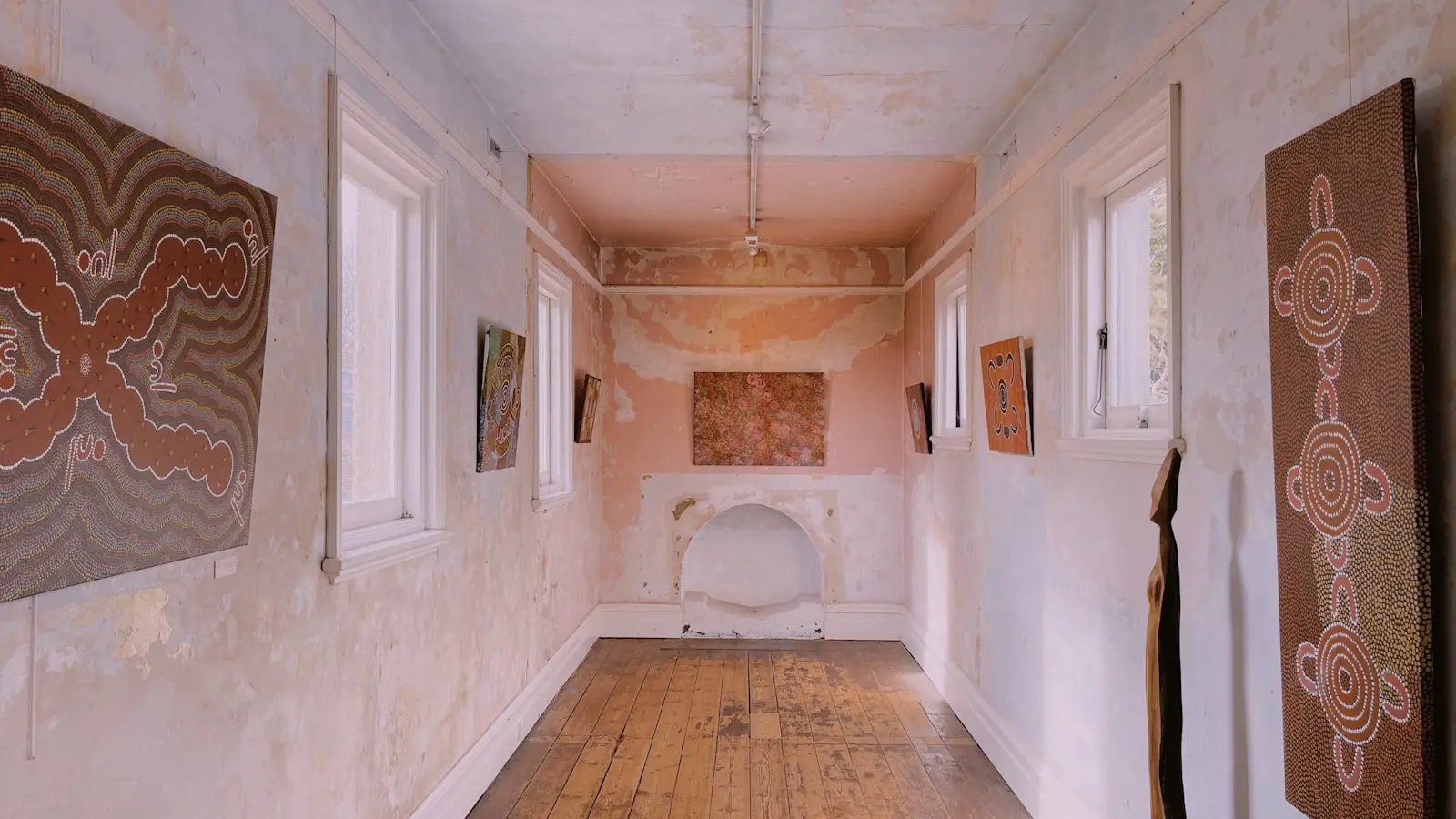
The Indigenous Art Centre (formerly the Darwin Aboriginal Art and Culture Centre) is one of the NT's most important cultural spaces. You can watch artists working in the studio itself, which is the whole point really. You're seeing practices that keep cultures alive, cultures with 65,000 years of unbroken history behind them. What's on display matters too. You'll find traditional dot painting and bark paintings next to contemporary installations, textiles, and mixed media work that shifts how people think about Indigenous Australian art.
The Centre backs artists from remote and regional communities across the Top End with real commercial and educational support. Collectors and serious buyers can get direct access to properly documented work that's been carefully chosen. Artists often have major cultural responsibility, and the Centre respects their knowledge keepers and community protocols through sales and exhibitions. Money spent here goes straight to the artists and their communities, not to middle people taking a cut.
The Centre also runs regular talks, demonstrations, and cultural events. These matter because they let you understand what's actually in the artworks, stuff that Western viewers often miss completely. A painting that looks abstract could be mapping ancestral songlines across country. A sculpture made from natural materials might connect to sacred knowledge that outsiders only partly grasp. Knowing that context completely changes how you see the work.
Exploring Devonport Street: Darwin's Gallery Precinct
Devonport Street has turned into Darwin's main gallery strip. Several galleries cluster within easy walking distance, each with their own approach to what they show and how they run things. You can spend a morning looking at serious contemporary art without needing to trek across the whole city like you would in other Australian places. What happened here wasn't planned from the top down. The gallery owners were just responding to creative activity that was already happening in the area.
The galleries are pretty different from each other. Some specialise in Indigenous Australian art and have audiences well beyond Darwin. Others go for emerging contemporary art across video, installation, sculpture, painting, textiles. You've got places with tight conceptual ideas sitting alongside more relaxed spaces that just want to celebrate good visual work and cultural mixing. Each one has a distinct point of view. It doesn't get dull bouncing between them.
Devonport Street fills up during Darwin's art events and exhibition openings. May through October, the Dry Season, sees more activity in the galleries as the temperature drops and visitors increase. Many galleries time their openings together, so you can hop from one to another without much fuss. There's a real casual feel to it all, with people hanging around in courtyards and cafes.
Top End Contemporary: Australia's Next-Generation Artists
Darwin attracts contemporary artists fed up with how commercialised the Australian art market's become. Some arrive with established practices, wanting somewhere they can create without getting endlessly pushed to post on social media or chase the next show opening. Others are earlier in their careers and come for the practical stuff: cheaper rent, available studio space, and other artists actually around to talk to. What links them is that they want to make serious work without the art world constantly trying to turn it into product.
The work coming out of Darwin studios is all over the place. Sculptors engage with indigenous materials and landscape traditions. Video makers look at environmental themes particular to the tropics. Painters work with colours shaped by that distinctive Top End light. Installation artists respond to the regional architecture. Most of these artists aren't copying what's trending in Sydney or Melbourne. They're making work that's rooted in the place itself, work that comes from being here rather than being imported fully formed.
The galleries showing contemporary work have started taking artist representation and fair payment seriously. Darwin's smaller art market means you see less of the dodgy dealings that happen in bigger cities where artists get lost in anonymous online sales. Artists tend to get proper, transparent deals about commission and pricing. Most galleries actually back the artists they work with across multiple shows instead of just treating them as interchangeable parts. That consistency helps artists develop their practice over time, which collectors genuinely appreciate.
Seasonal Rhythms and Visiting Darwin for Art
Darwin's art calendar is completely dictated by the NT's brutal climate. The Dry Season (May to October) brings cooler weather, lower humidity, and a heap more people. That's when galleries throw their major shows, openings fill up, and the cultural calendar gets packed. If you're planning a proper art trip, these months just make sense. You can walk between galleries without melting, you'll bump into more people, and you'll actually feel the place humming with activity.
The Wet Season (November to April) is the flip side: quieter and more personal. Tourists thin out, the rain doesn't stop, and the whole city slows down. But if you're a serious collector or researcher and don't mind working around the weather, you get something most visitors miss. You can arrange studio visits, have proper conversations with the people running galleries, and catch work that hasn't gone public yet. Some artists and galleries actually schedule major projects during this stretch when there's fewer other things going on.
Getting to Darwin is different from flying into Sydney or Melbourne. There aren't as many flights from the south, and they cost more. But that same isolation has kept the city from being swarmed by international tourism the way other Australian art hubs have. For gallery hopping, the CBD or nearby is your best bet since most galleries are walkable. Just remember most galleries shut on Mondays, so plan around that.
Contemporary Photography and Documentary Practices
Photography matters seriously in Darwin's art scene. The tropical setting delivers visual stuff that works well for cameras: intense storms, dramatic sunrises, Indigenous cultural practices, and stark ecological contrasts. Several galleries here focus on photography, ranging from fine art prints to documentary work tackling social and environmental issues. The northern location provides unusual light quality that photographers reckon is invaluable. Video installation and other time-based work has grown as well, dealing with climate change, cross-cultural identity, and related topics.
Documentary photography of Indigenous communities and environmental issues forms a major part of NT arts output. You'll see work about conservation, colonial history, and cultural preservation regularly in local galleries. These aren't outsiders dropping in for a quick project. Many practitioners have spent years in the region and work with communities as partners rather than subjects. Their photography operates as both art and a form of cultural advocacy, carrying serious political and social weight.
Darwin galleries have become recognised sources for collectors wanting to buy photography. Prices here tend to be more reasonable than you'd pay for similar work down south, though good contemporary pieces are still fairly priced. Plenty of photographers based in or regularly showing in Darwin also work and exhibit elsewhere, so their pieces get into national and international art markets. That combination of local grounding and wider reach makes Darwin photography worth paying attention to if you're after work that matters regionally while still engaging with contemporary art globally.
Museums, Institutions and Broader Cultural Context
The Northern Territory Museum and Art Gallery sits in Bulwark Park and gives you a proper feel for what's happening in Darwin's art scene. You'll find significant Indigenous art collections there, along with natural history and military heritage stuff. The place treats Indigenous Australian art as something that's alive and still changing, not just something locked away in the past. They swap out temporary exhibitions fairly often, usually spotlighting local Territory artists or things specific to the Top End region. Best bit is entry's free.
Darwin's smaller community galleries and artist-run spaces carry real weight in how the city's culture actually works day-to-day. These venues put on emerging and experimental work that probably wouldn't fit into the bigger galleries' regular programming. The artist-run spaces act as testing grounds where people try out new ideas, check whether their concepts work, and build skills alongside each other. If you're after genuine artistic experimentation rather than polished commercial stuff, you'll find something worthwhile here. Just check opening hours and what's on before you head out, since things change around.
Music venues, theatre spaces and literary festivals all mesh in with the visual arts scene. Artists working across different mediums chat with each other constantly. A visual artist might end up making a sound installation with musicians, or getting involved with a theatre production. Because Darwin's a fairly small place with a tight creative community, this kind of mixing of disciplines actually happens pretty regularly, producing interesting hybrid work that wouldn't come about if everyone just stayed in their own lane.
Building a Collection: Advice for Serious Collectors
When you're buying art from Darwin galleries, a few key things matter. Start by actually getting to know the gallery owners and staff. Darwin's art scene is pretty tight, and people here care about collectors who show up and are genuinely into it, not just speculators. Spend time in the galleries, go to openings, ask proper questions about the work. If you do that, the owners will go out of their way to help you put together a collection that fits what you actually care about. A lot of them have connections with artists who haven't made it into the southern galleries yet, so you get access to stuff that's not everywhere else.
When you're buying Indigenous artwork, provenance and knowing the context matters a lot. Good galleries keep solid records about where the artist comes from, which community they're part of, and what the imagery actually means. Before you buy Indigenous art, make sure the paperwork is thorough and the artists are getting paid fairly. Galleries that work properly with First Nations artists will be straightforward about this. That transparency matters because it keeps the relationship between galleries and communities solid. Sometimes the higher price tag is actually a sign they're doing things properly, not just marking it up.
Darwin contemporary work stays way cheaper than what you'd pay for similar stuff in Sydney or Melbourne. That's good news if your budget's not huge but you want to buy serious art. Just don't assume cheap means dodgy, though. A lot of Darwin artists just haven't got gallery representation down south yet, so their work hasn't caught on price-wise even though it's genuinely good. Over the years, a number of Darwin artists have moved to the cities and suddenly their work costs a lot more. Those early purchases look like pretty smart calls in hindsight.
Looking Forward: Darwin's Evolving Artistic Landscape
Darwin's art scene is in flux. More international attention, better cultural tourism infrastructure, and a growing profile for Northern Territory artists means the city's getting more money and eyeballs pointed its way. That's good news on paper, but it cuts both ways. Tourism dollars push up property values, which can force out galleries and artists who've been here doing the work. There's a real risk the city's scrappy, experimental vibe gets smoothed over into something more polished and commercial. A lot hinges on how Darwin handles this pressure over the next few years.
What works in Darwin's favour is that isolation and geography are hard to fake. The tropical climate, the proximity to Asia, the deep Indigenous culture, you can't get those qualities anywhere else. Artists come here because of that particular mix. Good galleries operate here because they respect it. Even as the city gets more attention, those fundamentals aren't going anywhere, and they're likely to keep the scene feeling like Darwin rather than letting it turn into a generic arts hub.
If you care about art, this is actually a sweet spot to engage with Darwin. There's real creative energy happening, serious artists are working here, galleries know what they're doing, and Indigenous artists have more say in how their work gets shown and valued than they used to. Visiting, buying work, and building connections with people making art here directly supports the whole thing. The Northern Territory's artistic future isn't decided yet, what you do actually matters.