
Collecting
A Guide to Buying Your First Piece of Australian Art
1 June 2026
Why Now Is the Perfect Time to Start Collecting Australian Art
Getting into Australian art is easier than it's ever been. You've got laneway galleries in Melbourne, weekend shows popping up in Brisbane, art fairs happening in every major city. The real shift is how accessible everything's become. You don't need insider connections or deep pockets to start anymore. Online platforms, art fairs, and spaces run by artists themselves have broken down the walls that used to keep people out of the whole scene.
There's real satisfaction in owning Australian art. Our artists see things the way we do, shaped by our landscape, our light, our culture. When you buy from an Australian artist, you're not just decorating. You're part of the conversation about what it means to make art here. You're supporting someone who feels the Sydney heat, knows the Tasmanian wilderness, understands the red dirt inland the way only people who live it can. That sense of place matters. It's honest.
First-time collectors often find their early purchases hold their value. It's not a guarantee, but Australian artists with decent exhibition track records, real critical interest, and growing markets tend to perform well over time. Your first piece doesn't have to be an investment play, but it can be both something you love and something that makes sense financially.
Understanding Your Budget and Setting Realistic Expectations
Figure out how much you can actually afford to spend, and do it before you get attached to something. Australian art prices are all over the place. You might pick up something decent by an emerging artist for under $500, or drop several thousand on work by someone with an established gallery presence. Your budget doesn't set the quality or how much you'll connect with a piece. Some collectors are in it for the long haul, buying one carefully-chosen work each year. Others spread their money across multiple pieces. There's no right way, it just depends on your situation and what kind of collection you want to build.
Don't forget about the hidden costs. Professional framing or mounting can add 20 to 50 per cent to the final bill, depending on what the work needs. Galleries sometimes charge shipping, though plenty of local ones don't bother. If you're buying from artists in other cities or at regional fairs, you'll rack up travel costs. Insurance matters once your collection grows. Factoring in the whole picture means no unpleasant surprises and you can make choices with confidence.
Change how you think about what art is supposed to be. A lot of people start out looking for the next undervalued piece that'll triple in value. That rarely works out. Instead, buy things you actually want to look at every day. Does the work make you stop when you walk past it? Does it spark conversations? Does it connect to something about your experience of Australia, the landscape, the light, the culture? Those are the questions that really count. Forget whether the artist shows at a fancy gallery or has work in major museums.
Researching Artists and Building Your Knowledge
You don't need formal art history training to become a savvy collector, but you do need curiosity and willingness to put in the work. Find artists whose work appeals to you, then investigate properly. Look into their training, their exhibition history, and where their work has appeared. Have they shown at the Art Gallery of NSW, the National Gallery of Victoria, or regional galleries? Do established galleries represent them? What's the word from critics and art publications? None of this is a deal breaker on its own, but it all adds up and helps you figure out where an artist actually stands right now.
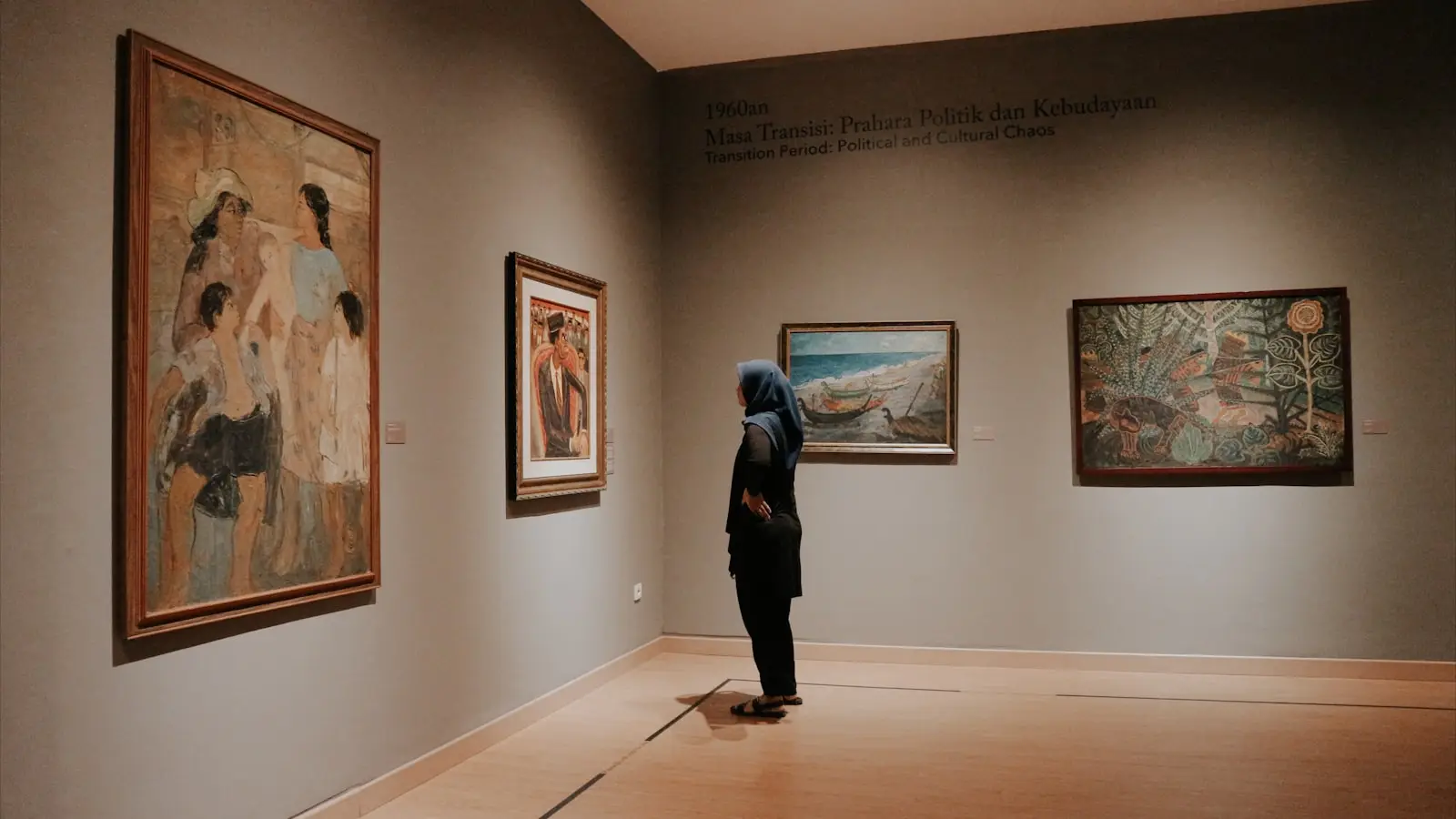
Get serious when you go to exhibitions. Don't just shuffle through. Spend proper time looking at the work. Read the wall text and any supporting material. Chat with the gallery staff if you get the chance. Most of them genuinely care about their artists and can explain things in ways you won't pick up yourself. If there are artist talks or studio visits on, go to them. That stuff stays with you and builds real confidence in your own taste.
Use online resources with your eyes open. Artist websites, Instagram, gallery pages, they're all handy but they're also polished marketing. Check things against each other. See what Australian art writers and bloggers reckon about emerging and established artists. Follow critics whose eye you trust. Keep a simple record somewhere, whether that's a notebook or a spreadsheet, with artists you're keen on, their work, prices, where you spotted them. It stops you making stupid snap decisions and helps you spot real chances when they come up.
Shopping at galleries, art fairs, and direct from artists
Australian galleries come in all shapes and sizes. You've got the big commercial operations in the cities, artist-run spaces, and newer business models popping up regularly. Most galleries work with artists on an exclusive basis and help establish credibility for them. Walking in for the first time can feel intimidating, but gallerists genuinely want to work with new collectors who care about the work. Chat to them, ask what you're looking for, mention you're just starting out. The good ones understand that thoughtful collectors often become steady supporters over time.
Art fairs held in Australia's major cities let you see plenty of work in one place and compare what's on offer across different galleries. They're far more relaxed than a formal gallery setting, and the gallerists working the booths are keen to meet new buyers. You'll spot emerging artists exhibiting alongside established names, with prices all over the map. Fairs are ideal for learning quickly and seeing pieces side by side. The downside is the sheer amount of stuff can do your head in. Walk through once without stopping, then go back to whatever actually caught your eye.
Buying directly from artists at studio open days, emerging artist spaces, or through someone you know has real advantages. You get to talk with the artist about the work and their thinking. Prices are often negotiable. The artist gets the full benefit without a gallery taking a cut. On the flip side, artists outside the gallery system might lack critical documentation or institutional backing, which could matter down the line if you decide to sell. Treat these deals the same way you'd approach anything else: ask questions about the work, learn about the artist's practice, and make sure you actually want the piece.
Authenticity, Documentation, and Protecting Your Purchase
When you buy from galleries or reputable dealers, you can count on authenticity. The good ones will stand behind their stock and hand over the paperwork. As you start buying elsewhere, understanding provenance becomes pretty important. Provenance is basically the ownership history of the work. For pieces by artists who've passed or those with serious market value, you'll want documented history, exhibition records, past ownership details, or certificates. Contemporary work from living artists? A gallery receipt with the work described on it will usually do the job.
Always grab proper paperwork when you buy. At minimum, you need a receipt listing the title, date, medium, dimensions, artist's name, price, and the gallery's details. A lot of galleries throw in certificates of authenticity or artist information cards too. These documents prove ownership, help when it comes to insurance claims, and matter if you later decide to sell. For bigger purchases, consider getting the work checked over by a professional conservator, particularly if it's a painting or works on paper that's been handled around. That gives you confidence about its condition and flags any repairs it might need.
Insurance is worth thinking about even if you're just starting out. Your standard home insurance usually won't cover art properly. As your collection grows, specialist art insurance becomes the sensible option. You'll need to document everything: photos, valuations, receipts, and keep them all safe. Build your own records as well: photograph each piece, note down dimensions and materials, file the receipts and certificates away. If you're collecting over time, that record becomes pretty valuable for insurance purposes and for keeping track of how your collection's developed.
Developing Your Curatorial Eye and Making Your First Purchase
Collecting comes down to what speaks to you personally. Skip what you reckon you should like, what goes with your lounge suite, or what might make money. Instead, train yourself to spot work that actually gets to you. Not every piece needs to be intellectually taxing. Some of the best art is simply beautiful and honest, and you want to be around it. Go with your instinct. When something pulls you up short, when your eyes keep coming back to it, when you end up staying in the gallery longer than you meant to, that's your taste kicking in. Notice it.
When you're ready to buy, take your time. Don't commit the first time you see something, even if you're certain. Look at it again on different days, in different light. Imagine it in your place. Sleep on it. That's not hesitation, that's good sense. Real works don't disappear overnight. If it's there and you're genuinely interested, it'll still be there. And if it sells to someone else? That's actually a good sign. It means other people reckon it's worth having too.
Your first purchase should make you happy. Pick something you want to bang on about, live with every day, keep looking at. Whether it's a small drawing by an up and coming artist or a painting by someone more established, it needs to feel right. That feeling, built on research, real thought, and choosing deliberately, is where you begin as a collector. After that, you'll build your eye. You'll get sharper at spotting quality, know more about art, and gather a collection that shows your real engagement with Australian art and culture.
Growing Your Collection and Staying Connected
Once you've got your first piece, you're in. The Australian art scene is small and tightly connected. Artists, gallerists, curators, collectors actually know each other. What you do matters. Get to gallery openings. Talk properly with artists online, follow what they're doing, comment when something hits you. Sign up to gallery mailing lists and art magazines. You stay in the loop this way and you're helping the system work, keeping Australian art moving forward.
Figure out what collecting means to you personally. Some people focus on a specific region, medium, or way of working. Others build collections around a theme: Australian landscapes, Indigenous artists, emerging female practitioners, experimental media, sculpture. Having that kind of focus makes it more rewarding and stops you from just buying random stuff. You don't need it all mapped out before you start, but knowing roughly where you're heading gives your collection shape and meaning.
{"text":"Collecting Australian art is basically about joining in on culture. Gallery visits and ownership of pieces, whether three or three hundred, both mean you're backing the artists, the institutions, and the communities that keep art happening here. That participation, that attention, sitting with work and really thinking about what Australian artists are doing, that's collecting. Everything else comes after that."}.
Practical Resources for Australian Art Collectors
Getting into Australian art collecting doesn't have to be complicated. The big public galleries in Sydney, Melbourne, Brisbane, and Perth all have solid websites with info on artists, shows, and what they've picked up. They run talks, tours, and events regularly that'll help you learn fast. If you want something more personal, regional galleries around Australia tend to know their local artists well and can offer a different experience. State galleries, uni spaces, and contemporary art venues each bring something different to the table, and it's worth checking a few out.
There's a lot more written about Australian art now than there used to be. Blogs, podcasts, and publications covering the scene help you keep track of what's on, what artists are doing, and what people are saying about work. Pick a few sources whose taste sits right with you and stick with them. Art fairs happen regularly in the major cities and bigger regions, which is handy because they bunch everything into one place and time. Even if you're just looking and not buying, they're worth the effort. Comparing work side by side and being around it teaches you plenty.
Online's made Australian art easier to access, but you've still got to think critically about what you're looking at. Lots of artists sell their own work through websites and Instagram. Galleries now put up detailed info about their artists and what's available. That said, be careful buying art online without seeing the actual thing first. Colour reads differently on screen. Scale and texture look nothing like the real deal. If you can, see something in person before you spend serious money on it. Actually being in front of a work, seeing the real colour and marks, understanding how big it actually is, standing there with it, nothing online comes close to that.